
Project brief
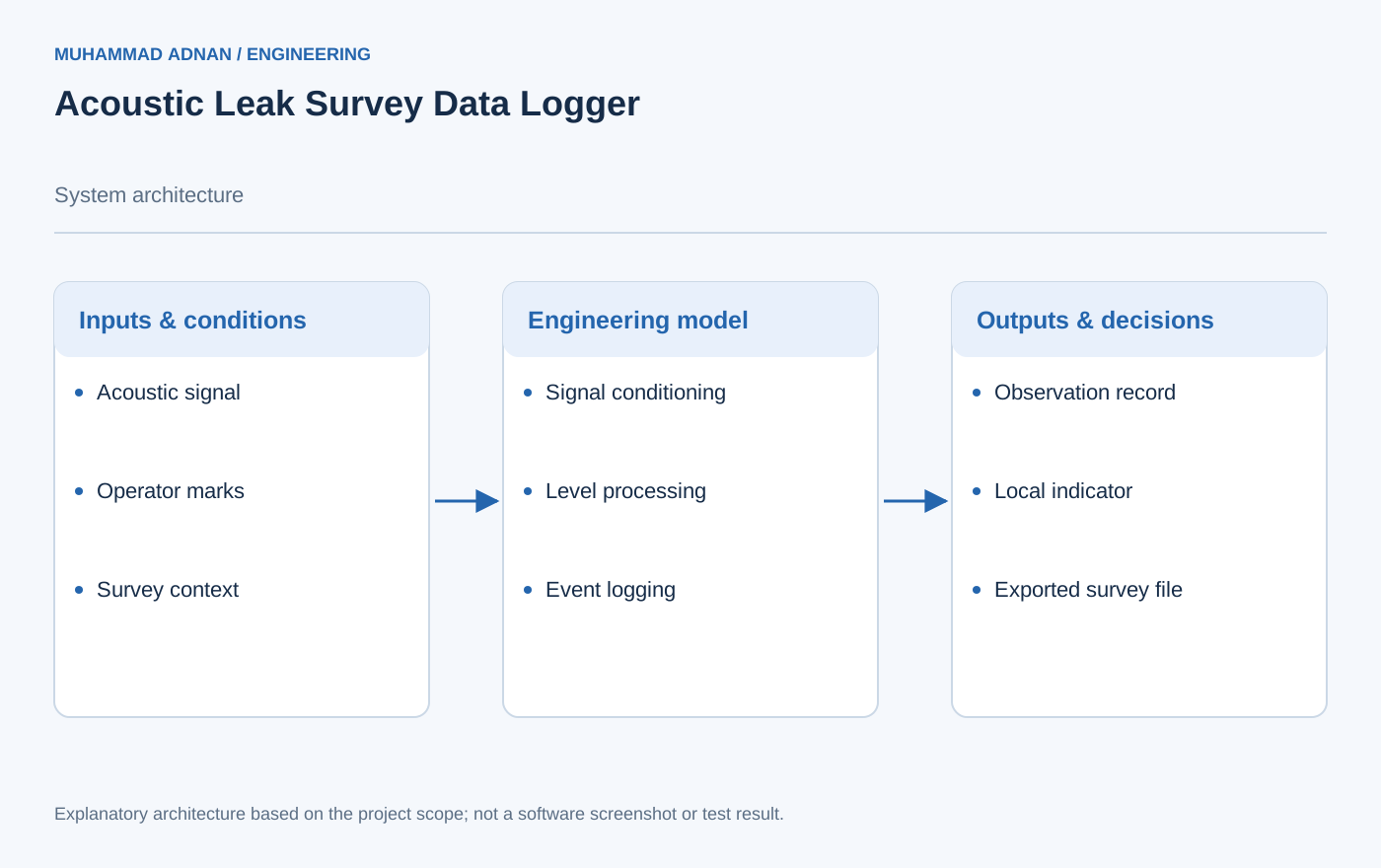
This concept would explore a handheld logger for documenting acoustic observations during a compressed-air maintenance survey. The initial prototype would use a microphone or ultrasonic receiver, a simple level-processing path, and a local interface for marking inspection points. The aim is to capture repeatable observations and contextual notes rather than automatically diagnose every leak or estimate monetary savings. The mechanical design would consider sensor orientation, operator grip, and protection from accidental contact. Proposed deliverables include a signal-chain outline, enclosure concept, and a controlled bench evaluation using a small regulated test leak. Site noise, distance, and pressure would be recorded with each observation, and any later classification capability would require its own labelled dataset and validation.
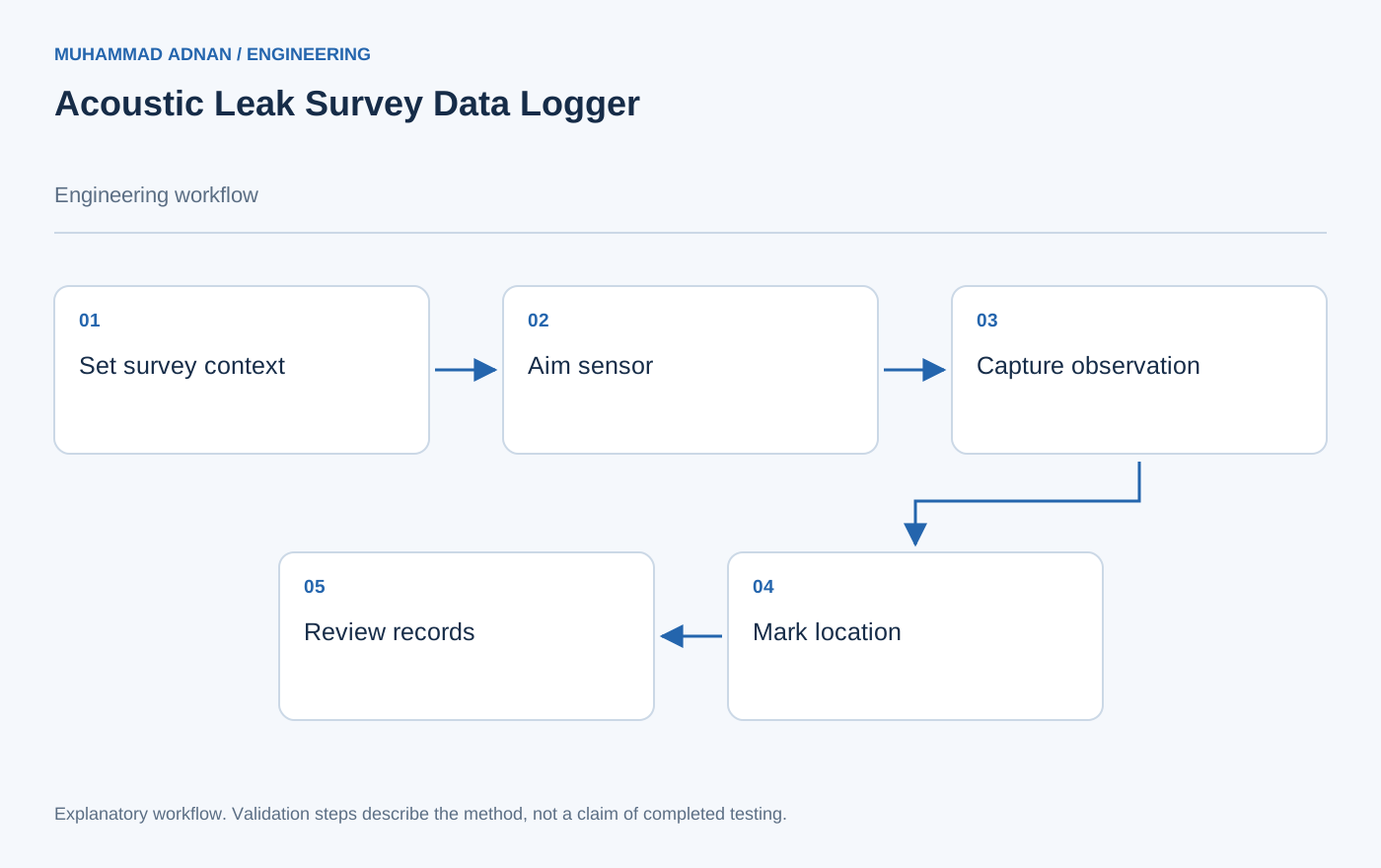
Design concept developed for this portfolio. The diagrams describe the proposed system; implementation and testing are part of the validation plan.
The engineering challenge
Capture comparable acoustic observations despite changing distance, orientation, and background noise.
Engineering approach
- Define sensor and signal-conditioning options.
- Record inspection context alongside signal summaries.
- Design a repeatable orientation and marking workflow.
- Plan controlled comparisons with a regulated test leak.
Validation plan
- Compare repeated observations at fixed geometry.
- Vary background noise independently of the test leak.
- Confirm recorded metadata remains associated with each acoustic sample.
Concept scope
- Acoustic event capture
- Inspection-point marking
- Distance and pressure notes
- Local observation storage
- Sensor-orientation guide
Software & engineering tools
Microcontroller, Python, KiCad, FreeCAD, Acoustic receiver