Project brief
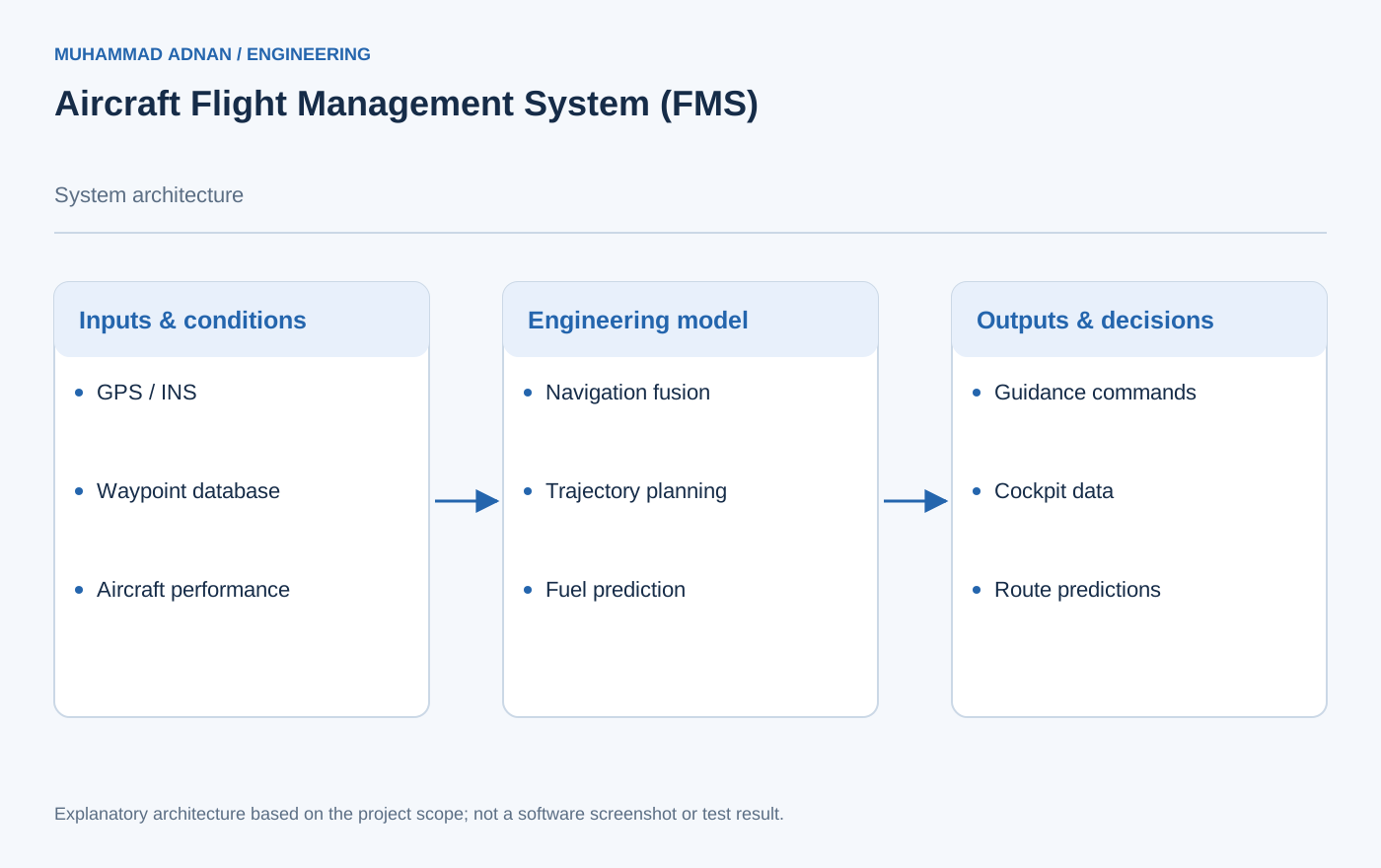
This comprehensive Flight Management System was designed for a 19-seat regional turboprop aircraft. The system performs real-time 4D trajectory planning using GPS/INS sensor fusion, manages fuel prediction, optimizes routing via waypoint databases, and communicates over ARINC 429 dual-channel data bus to cockpit displays and navigation receivers. The FMS interfaces with VOR/DME/ILS radio navigation aids and a Class 2 FMS RNAV computer.
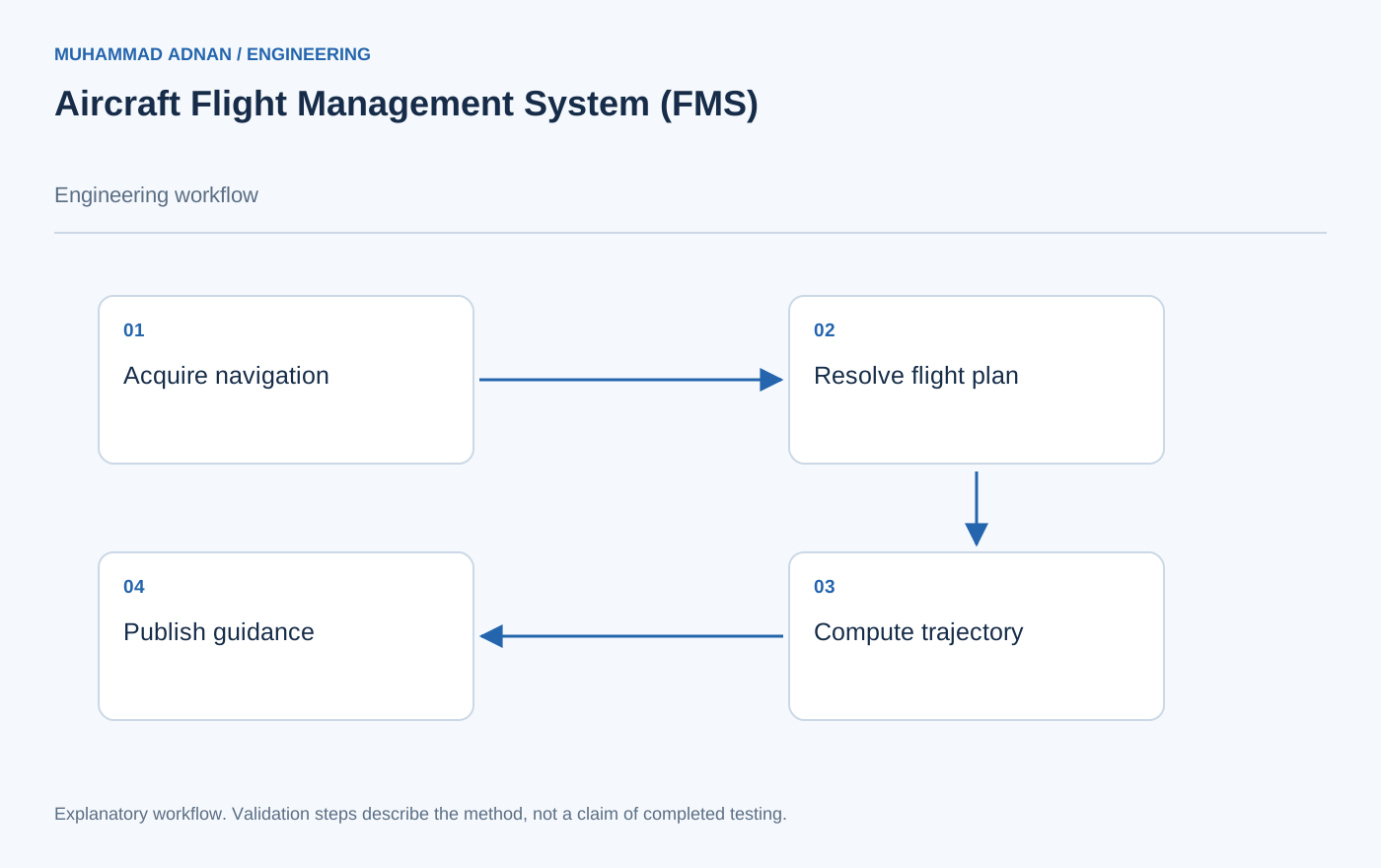
The case study connects navigation estimation, performance prediction, and avionics integration. The explanatory view illustrates the functions named in the project record.
The engineering challenge
Coordinate navigation, route intent, and aircraft performance within one flight management architecture.
Engineering approach
- Fuse the stated navigation sources into a consistent aircraft state.
- Organize waypoint, fuel, and trajectory functions around the active flight plan.
- Exchange guidance and display data through the ARINC interfaces.
Features & capabilities
- 4D trajectory planning with fuel cost optimization and time constraints
- ARINC 429 dual-channel data bus — 8 transmit, 16 receive channels
- Full RNAV/RNP capability with APV-BARO approach
- Integration with IRS, multi-mode receiver, GPS, VOR/DME radios
- Comprehensive waypoint database management (AIRAC cycle updates)
- Lateral and vertical navigation (LNAV/VNAV) modes with autopilot coupling
- Performance and fuel predictions with alternate airport computation
- DO-178C Level B software development lifecycle compliance
Software & engineering tools
STM32H743 (dual core), Xilinx Artix-7 FPGA, ARINC 429 transceivers (HS-3282), Altium Designer 23 (10-layer PCB), RTCA DO-178C / DO-254