Project brief
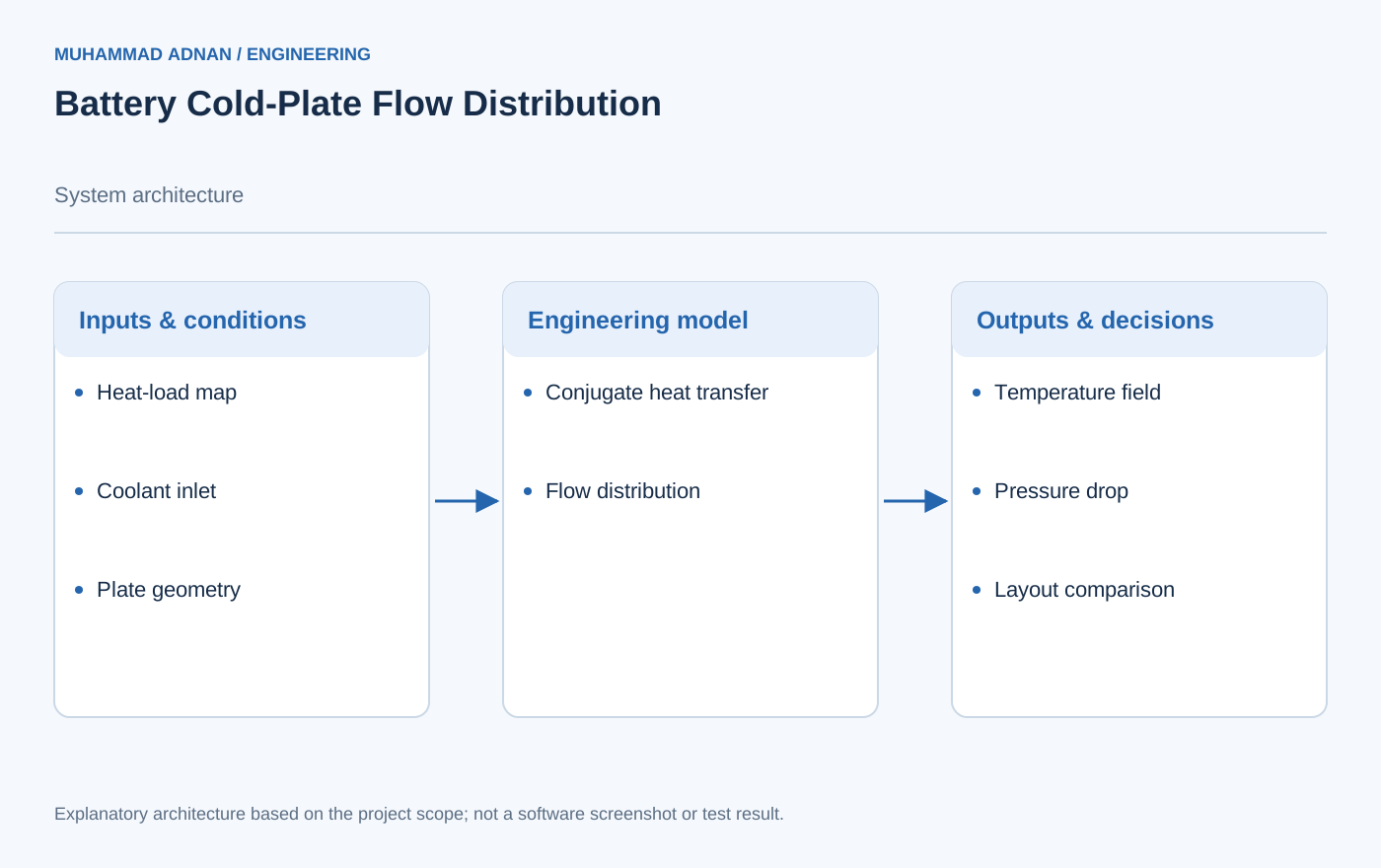
This concept would compare cold-plate channel and manifold layouts for a generic battery module using imposed heat loads. The study would make heat-source assumptions, coolant properties, and contact resistance explicit so that geometry effects can be discussed without implying a validated pack design. Candidate layouts would be evaluated for temperature uniformity, pressure-drop tendency, and practical machining or joining constraints. CAD sections would explain the flow path and the interfaces to a representative module. A later bench experiment would use electrical heaters and instrumented coolant rather than live cells for initial characterization. The proposed deliverables are a geometry trade study, model setup notes, and a correlation plan. No cell life, fast-charge capability, or thermal performance result is claimed.
Design concept developed for this portfolio. The diagrams describe the proposed system; implementation and testing are part of the validation plan.
The engineering challenge
Distribute coolant and remove nonuniform heat without making the plate excessively restrictive or difficult to manufacture.
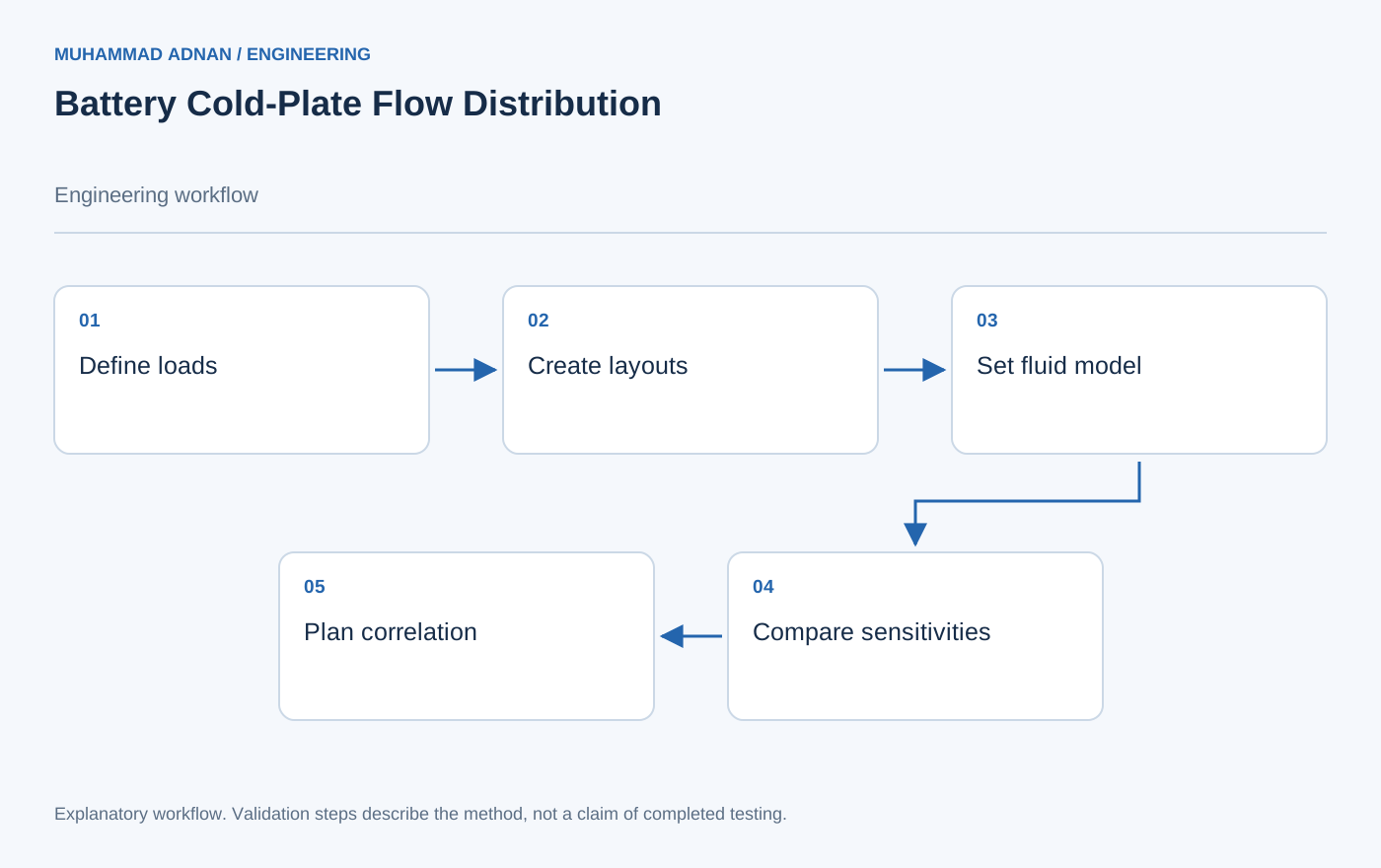
Engineering approach
- Define imposed heater loads and coolant assumptions.
- Compare parallel and serpentine channel families.
- Review manifold balance and contact-resistance sensitivity.
- Plan a heater-based thermal correlation experiment.
Validation plan
- Check mesh sensitivity and energy balance in the model.
- Measure inlet, outlet, and plate temperatures on a heater rig.
- Compare measured pressure drop with the modeled trend.
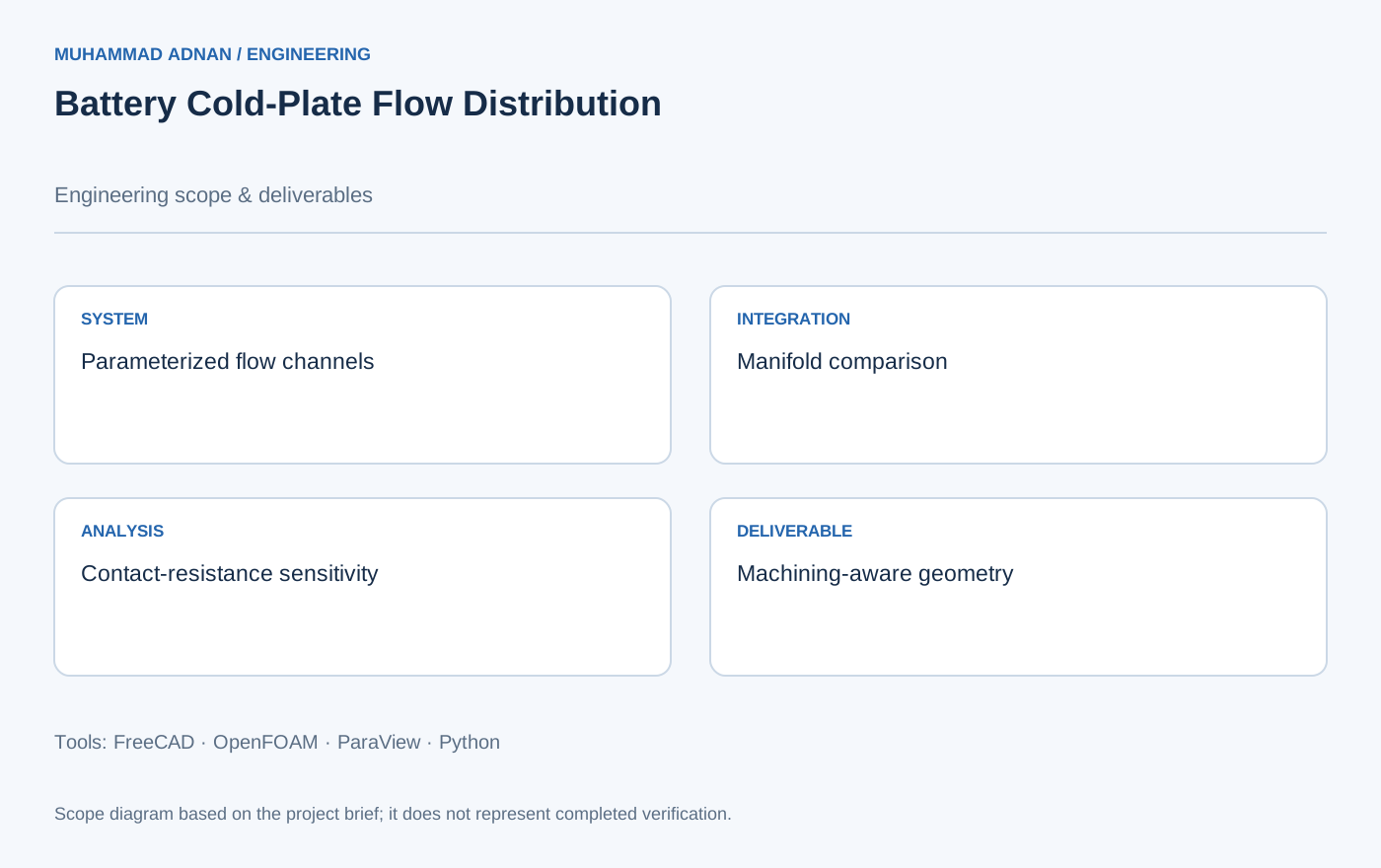
Concept scope
- Parameterized flow channels
- Manifold comparison
- Contact-resistance sensitivity
- Machining-aware geometry
- Heater-based test concept
Software & engineering tools
FreeCAD, OpenFOAM, ParaView, Python