
Project brief
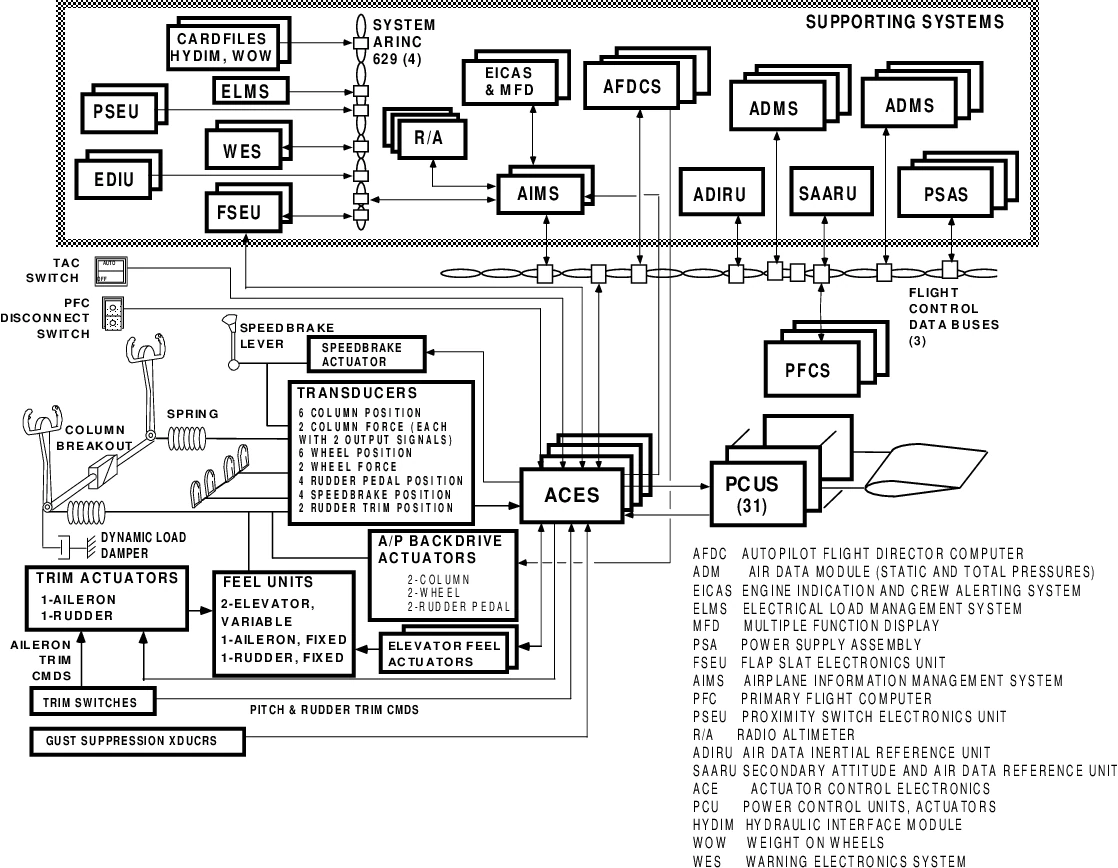
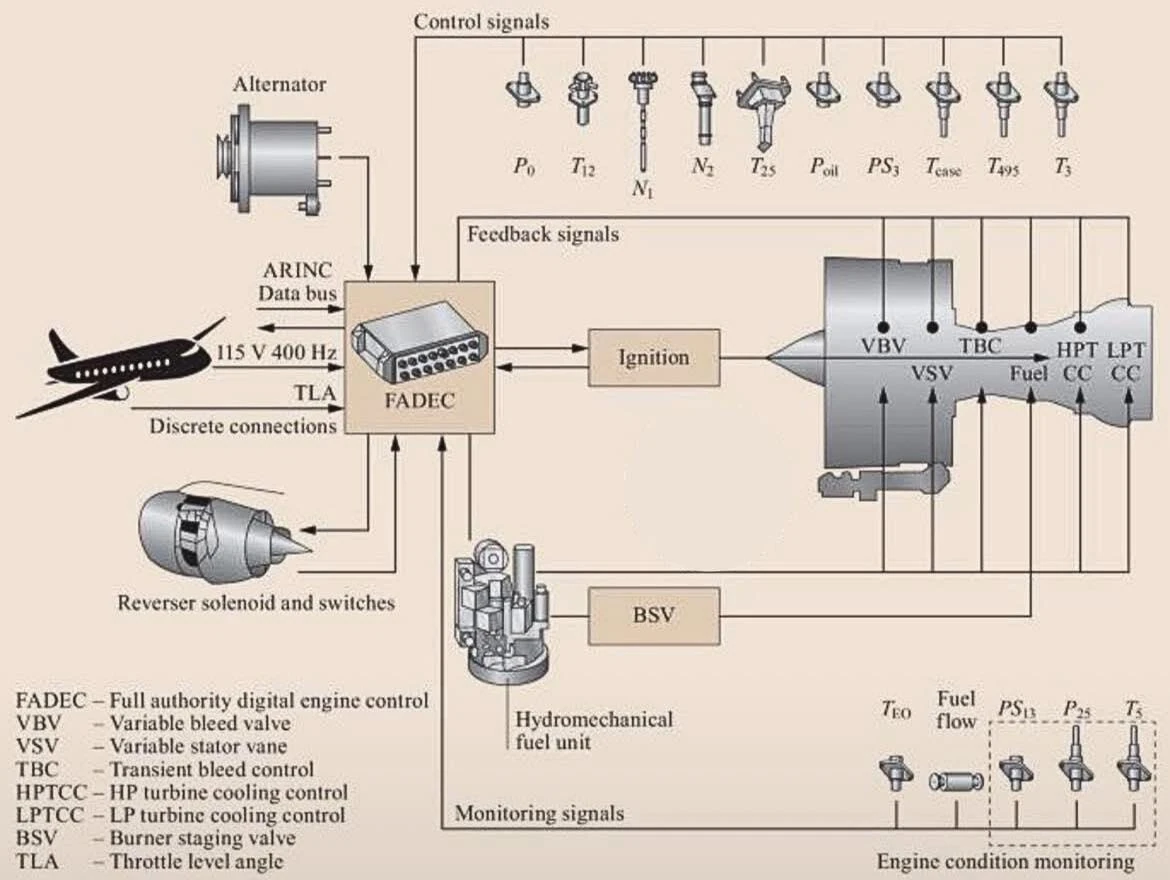
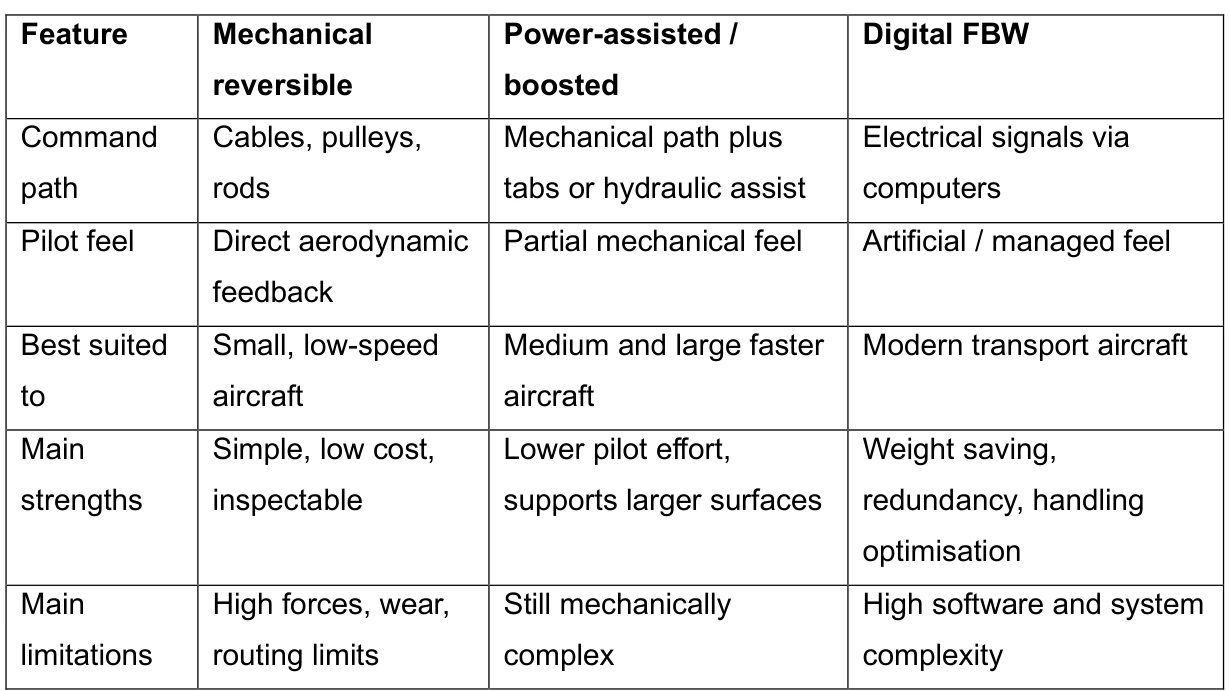
This aircraft-systems review traces the progression from direct mechanical controls to hydraulic assistance and digital fly-by-wire, then applies that framework to the Boeing 777. The flight-control discussion separates pilot input, aircraft-state sensing, primary flight computers, actuator-control electronics and hydraulic surface actuation. An architecture diagram supports the explanation of data exchange, redundant computation and the distribution of control functions. A comparative table places the benefits of digital control alongside its dependence on electrical continuity, software integrity and maintenance capability. The engine-control section follows a parallel development from hydromechanical metering through electronic supervision to full-authority digital engine control. It treats the electronic engine controller as an integrating element across thrust demand, fuel metering, variable geometry, cooling and engine-start sequencing. A retained control-loop schematic makes the command and feedback paths visible, including links between sensors, the controller, the hydromechanical fuel unit and engine actuators. The result is a structured explanation of how subsystems interact and why redundancy and monitoring matter to the overall architecture. This is a literature-based engineering review rather than a new control-system implementation or simulation. Its evidence consists of report diagrams, comparison tables and component-level reasoning, with no claim of independently measured aircraft performance.
The engineering challenge
Explain the interaction of multiple flight and engine-control subsystems while distinguishing control computation, actuator interfaces, physical hardware and fault tolerance.
Engineering approach
- Compare mechanical, assisted and digital flight-control generations.
- Map the roles of sensing, primary flight computers, actuator-control electronics and control buses.
- Trace how redundant channels support command processing and monitoring.
- Compare hydromechanical, hybrid and full-authority engine-control approaches.
- Integrate fuel, cooling and start functions into a command-and-feedback explanation.
Results & observations
The review distinguishes control-law computation from the interface to hydraulic actuation.
Mechanical reversible, power-assisted/boosted and digital fly-by-wire systems are compared.
The review follows the EEC/FADEC role across these three functional areas.
More integrated control is discussed alongside electrical, software and maintenance requirements.
Features & capabilities
- Flight-control generation comparison
- Boeing 777 architecture decomposition
- Command and sensor path tracing
- Redundancy discussion
- Engine-control evolution
- Fuel/cooling/start integration
Software & engineering tools
Systems architecture analysis, Component-role mapping, Technical literature review