Project brief
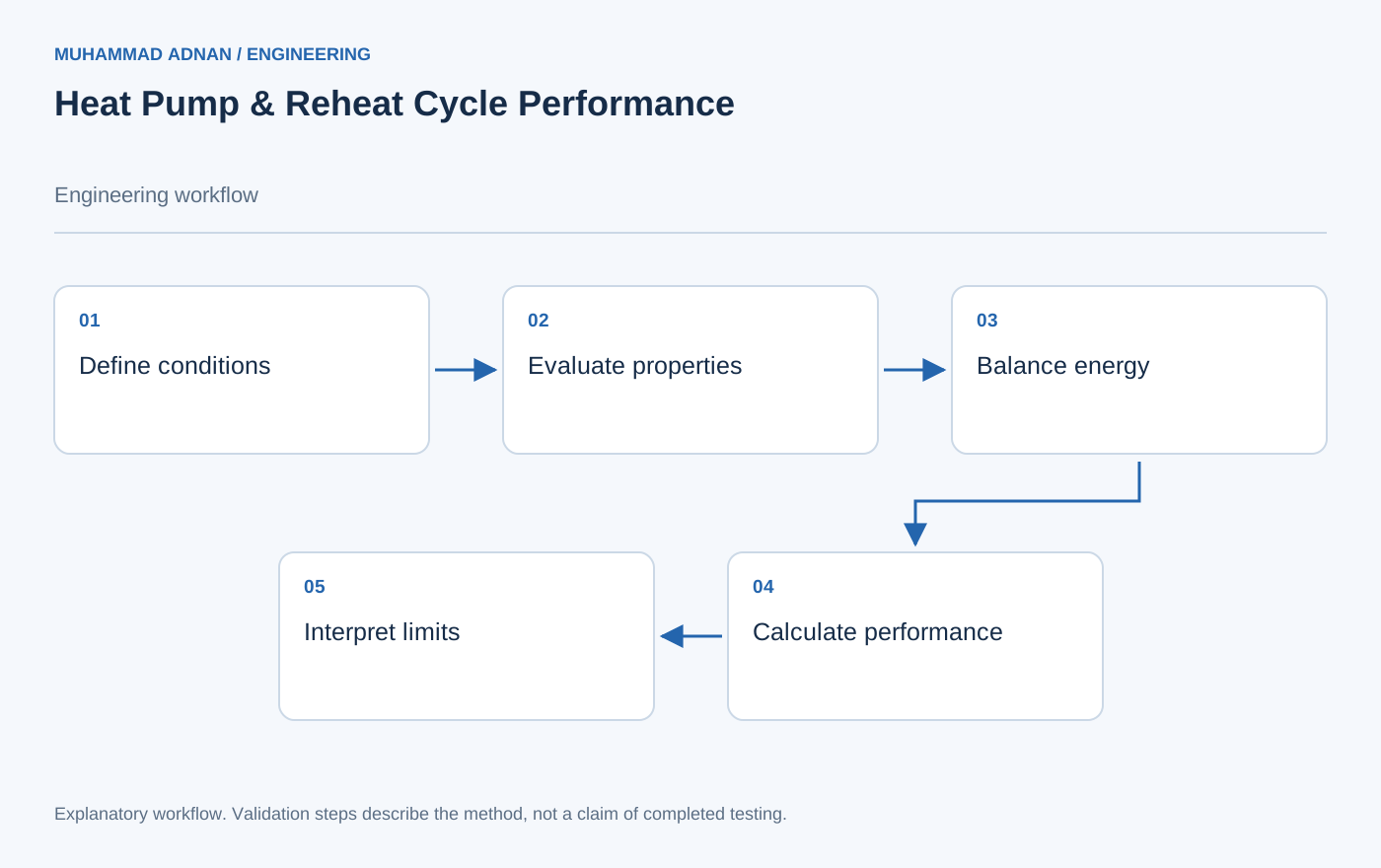
This analytical project connects heat-pump and refrigeration performance with steam-power-cycle calculations. It begins by deriving the coefficient of performance from energy balances and using the Carnot relationships as theoretical benchmarks. A refrigeration example compares actual performance with the maximum available between the specified hot and cold temperatures, making the effect of irreversibility explicit. The report then examines the role of temperature lift, discusses industrial waste-heat recovery, and distinguishes an ideal benchmark from the practical constraints of real equipment. The steam-cycle section evaluates reheat Rankine arrangements with thermodynamic state properties obtained using IAPWS-IF97. One case includes non-ideal turbine and pump efficiencies and calculates the steam flow needed for a specified net output. A second ideal case determines turbine inlet temperatures from the stated exit quality and computes thermal efficiency. State tables, energy balances and qualitative temperature-entropy sketches connect the individual component calculations into complete cycles. The reported efficiencies belong to different operating conditions and should therefore be read as separate worked examples, rather than a controlled efficiency comparison. The work demonstrates traceable thermodynamic calculation and interpretation; it does not present a tested plant or measured equipment performance.
The engineering challenge
Translate component conditions and efficiencies into complete refrigeration and steam-cycle energy balances while keeping theoretical limits distinct from practical performance.
Engineering approach
- Derive refrigeration and heat-pump COP relationships from energy balances.
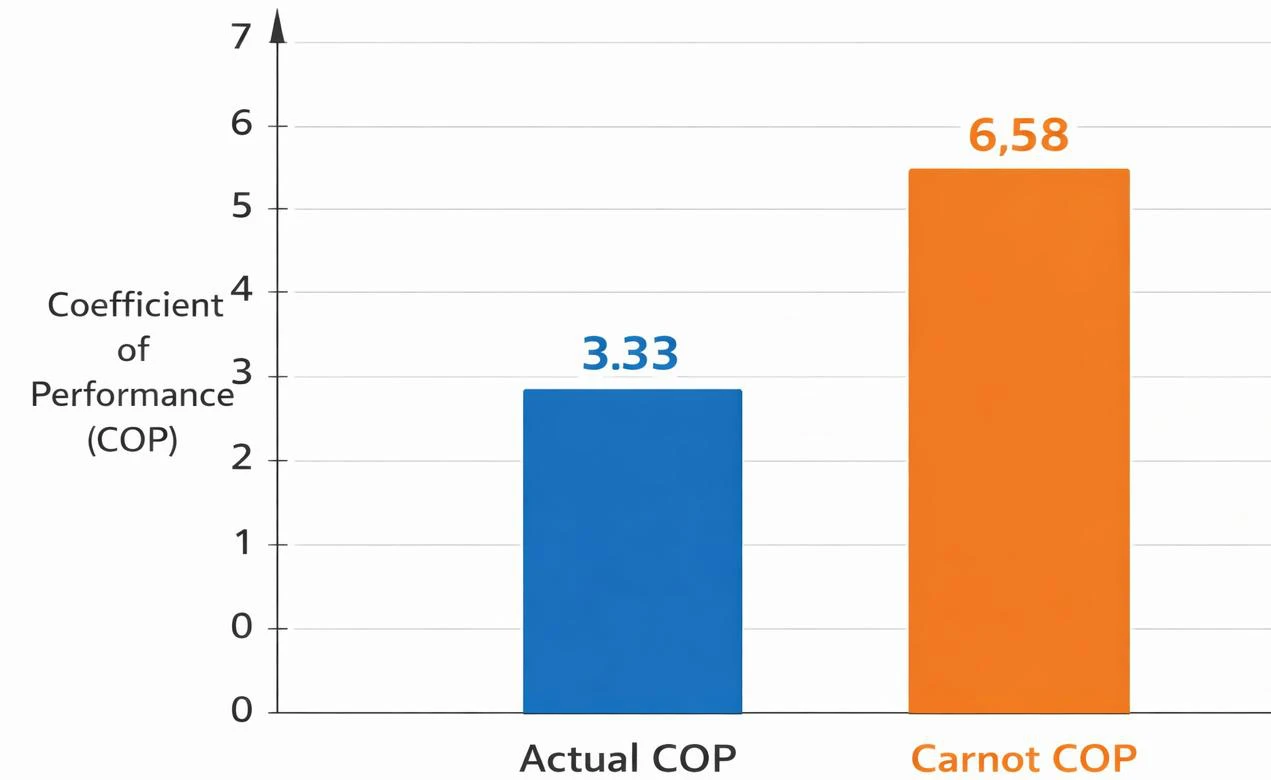
- Compare a worked refrigeration case with its Carnot benchmark.
- Use IAPWS-IF97 state properties for ideal and non-ideal reheat Rankine examples.
- Calculate component work, heat input, thermal efficiency and steam mass flow.
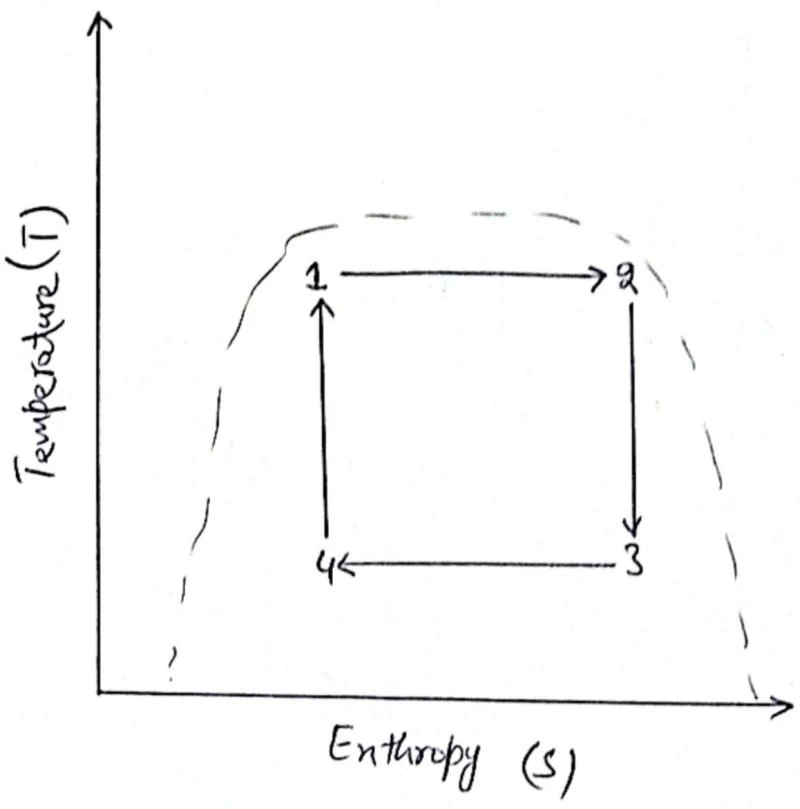
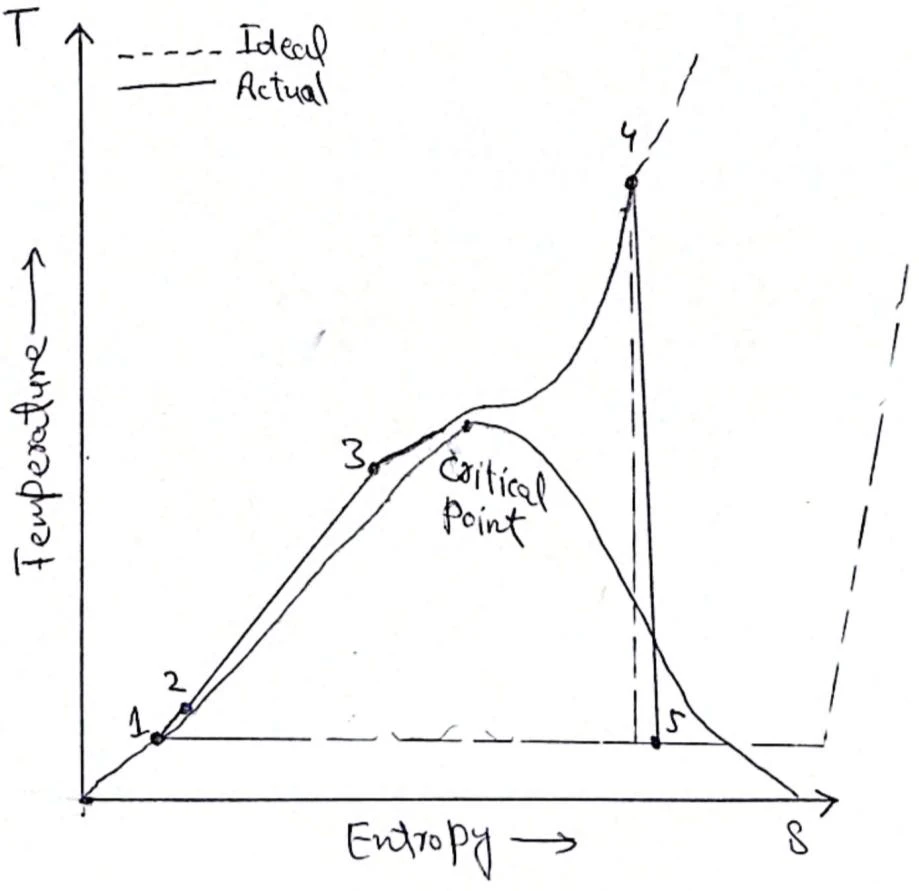
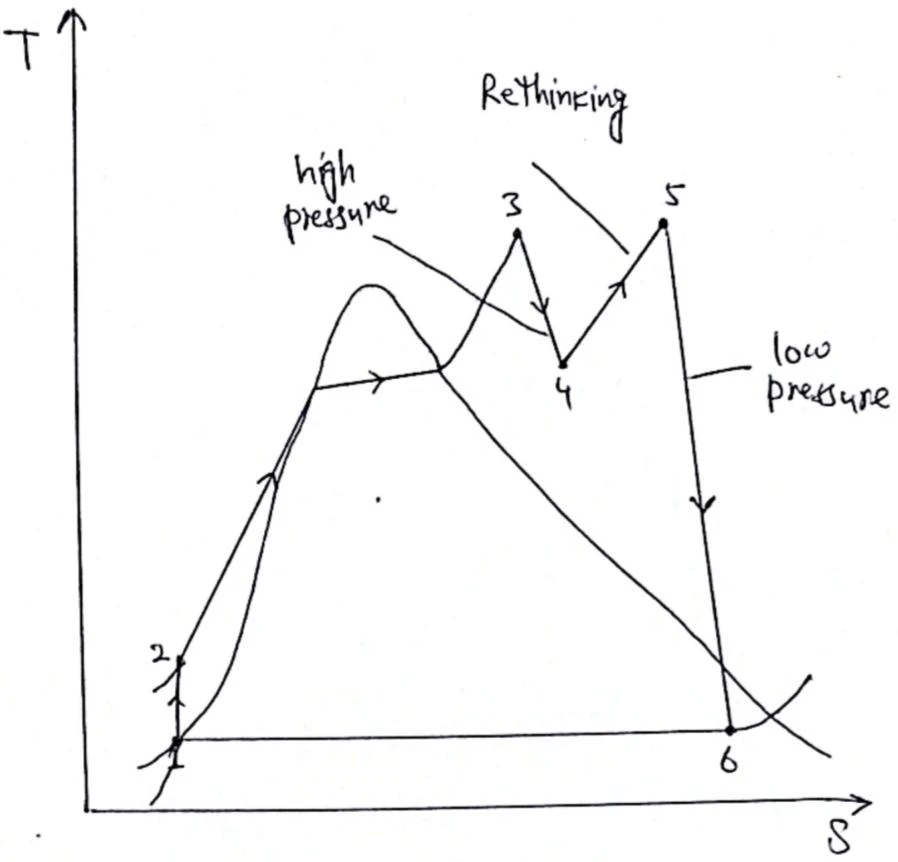
- Use qualitative temperature-entropy sketches to explain the cycle processes.
Results & observations
Worked example with 10 kW cooling and 3 kW compressor input; Carnot COP is 6.58.
Reported reheat Rankine calculation with 80% turbine and 95% pump isentropic efficiencies.
Calculated for the non-ideal reheat cycle at 80 MW net power.
Separate ideal reheat example with different pressure and turbine-inlet conditions.
Features & capabilities
- COP derivation
- Carnot performance benchmark
- Reheat Rankine state tables
- Component-efficiency corrections
- Steam mass-flow calculation
- Temperature-entropy schematics
Software & engineering tools
IAPWS-IF97 steam properties, Thermodynamic energy balances, Temperature-entropy diagrams