
Project brief
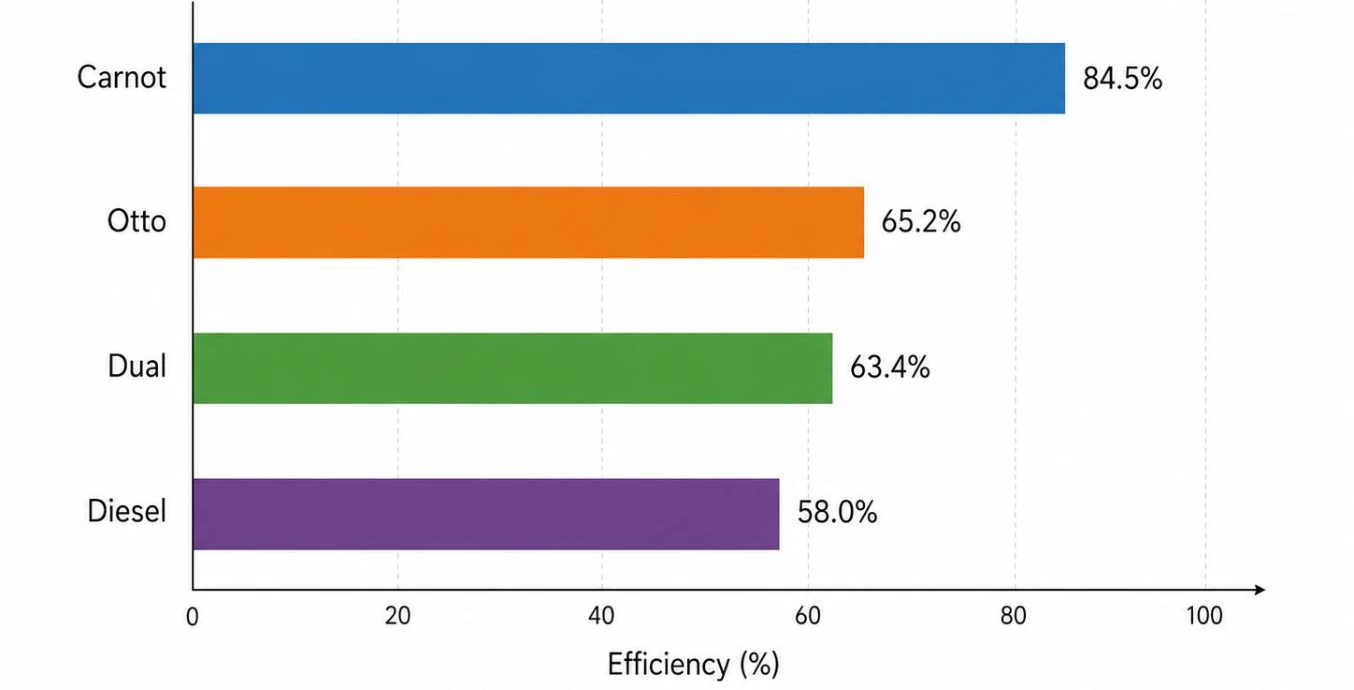
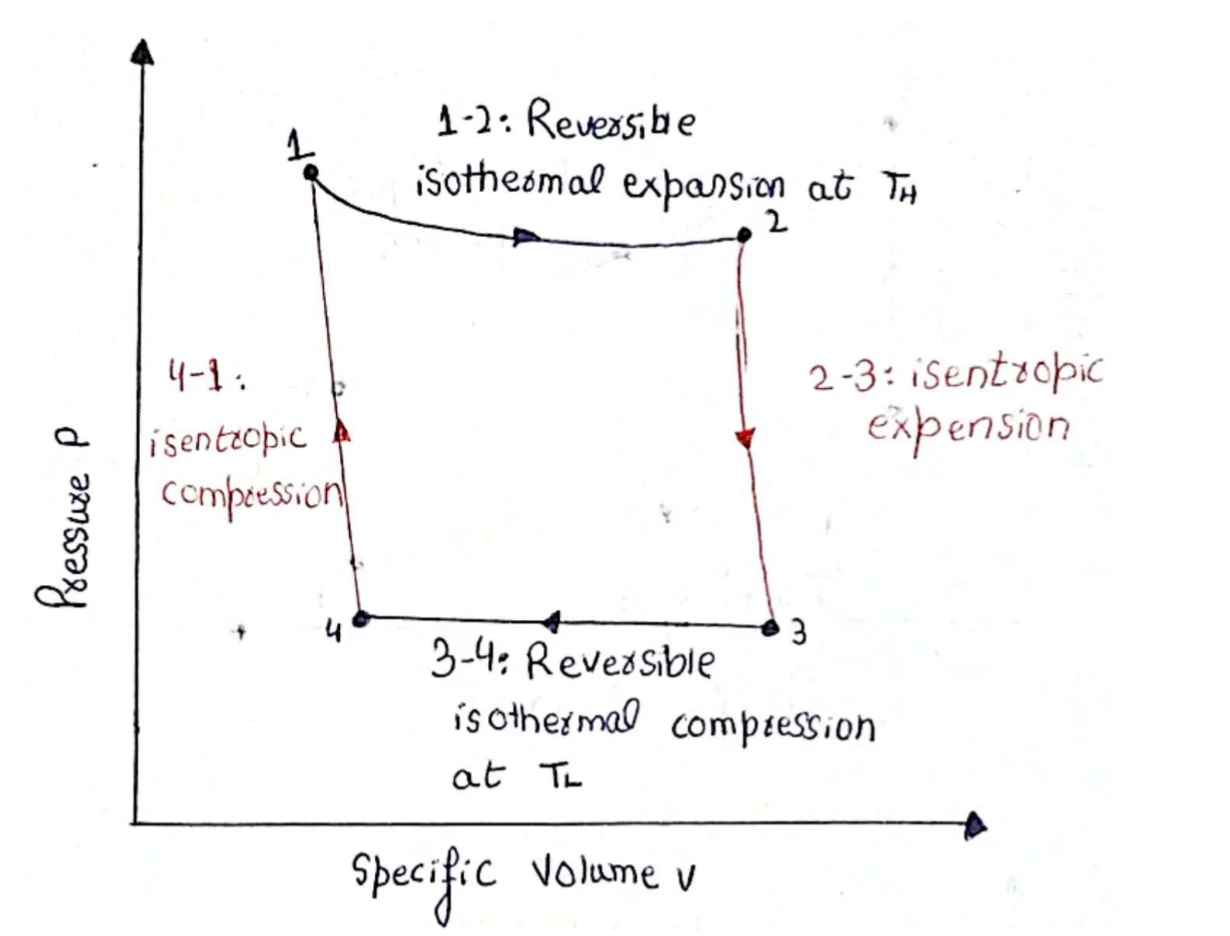
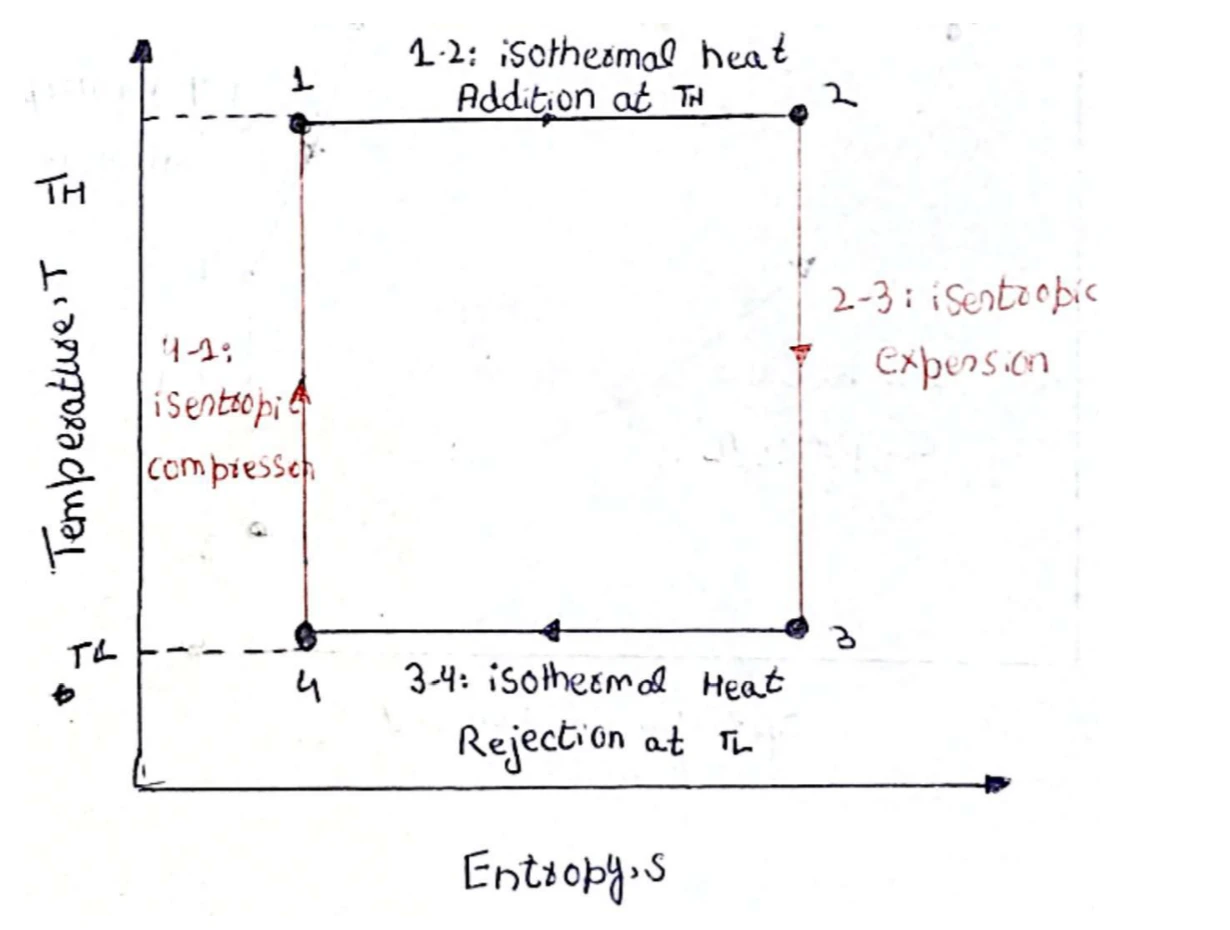
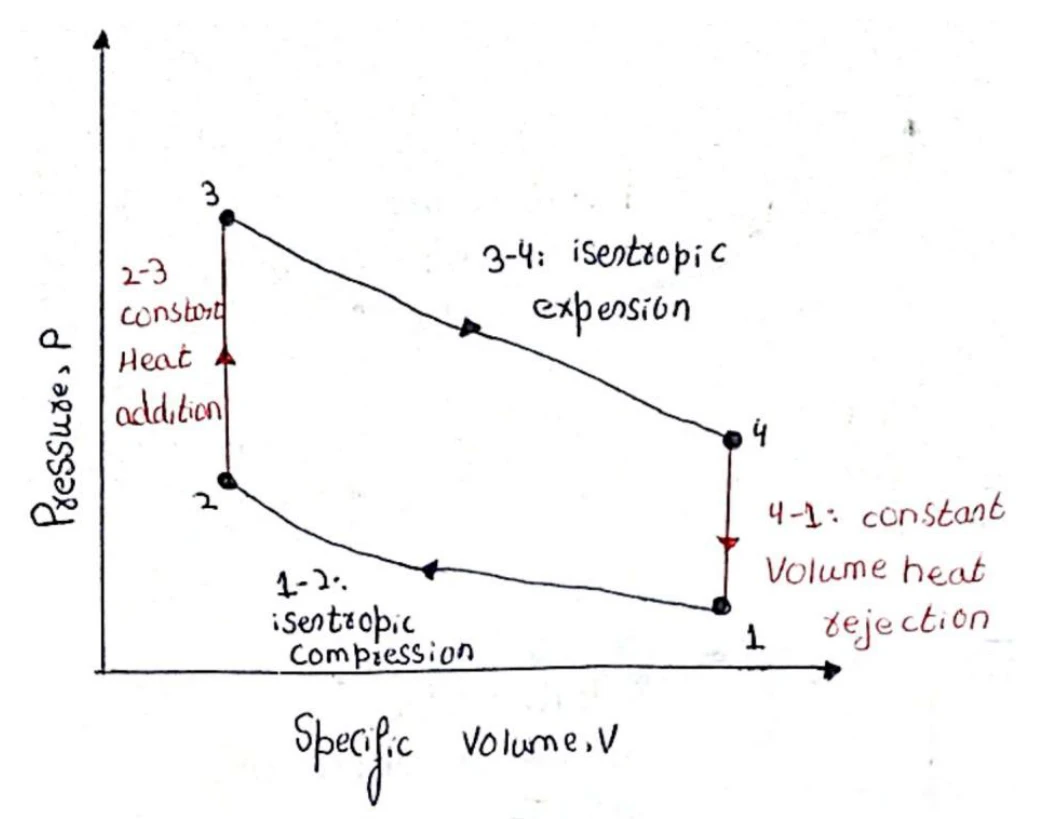
This ideal-cycle investigation studies how temperature limits, heat-addition paths and compression ratio affect thermal performance. Carnot pressure-volume and temperature-entropy diagrams establish the reversible reference cycle. A reservoir-temperature example then shows why changing the heat-source temperature does not create a generally proportional change in efficiency. The entropy calculation follows isothermal compression of air from 1.0 to 1.5 bar, separating the entropy change of the air from that of its surroundings and the total increase caused by heat transfer across a finite temperature difference. The internal-combustion section compares Otto, Diesel and dual heat-addition models before solving a five-state dual cycle with a compression ratio of 14. Constant-volume and constant-pressure heat inputs determine the peak temperature; expansion and heat rejection complete the energy balance. A lower-compression-ratio case provides a sensitivity comparison. The study is an air-standard analytical exercise, so its efficiencies describe the specified ideal models rather than real engine performance. The drawings, comparison chart and numerical state results make the modelling sequence visible and connect thermodynamic limits with the assumptions required to use them.
The engineering challenge
Compare ideal heat-engine models consistently while tracking entropy transfer, irreversibility and the effect of compression ratio.
Engineering approach
- Describe the four reversible Carnot processes using cycle diagrams.
- Calculate efficiency for the stated reservoir temperatures and a doubled source temperature.
- Separate system, surroundings and total entropy changes for isothermal compression.
- Solve dual-cycle temperatures and heat rejection from the stated heat inputs.
- Compare ideal-cycle efficiencies and compression-ratio sensitivity.
Results & observations
Reported ideal model at compression ratio r=14 with 1.7 Btu total heat input.
Report sensitivity case at r=12 with the same initial state and heat inputs.
Calculated state 4 after constant-pressure heat addition.
Reported isothermal-compression example with heat transfer to 300.15 K surroundings.
Features & capabilities
- Carnot cycle diagrams
- Reservoir-temperature sensitivity
- System and surroundings entropy balance
- Otto and Diesel comparison
- Five-state dual-cycle solution
- Compression-ratio sensitivity
Software & engineering tools
Air-standard cycle equations, Ideal-gas relations, Entropy balances, Pressure-volume diagrams