
Project brief
Large-scale environmental monitoring network deployed across a 2km² industrial facility using LoRaWAN long-range wireless technology. Each of the 54 deployed nodes is solar-powered with supercapacitor energy storage, capable of operating for 10+ years maintenance-free. The system monitors air quality parameters including PM2.5, PM10, CO2, VOC index, NO2, O3, temperature, humidity, and atmospheric pressure.
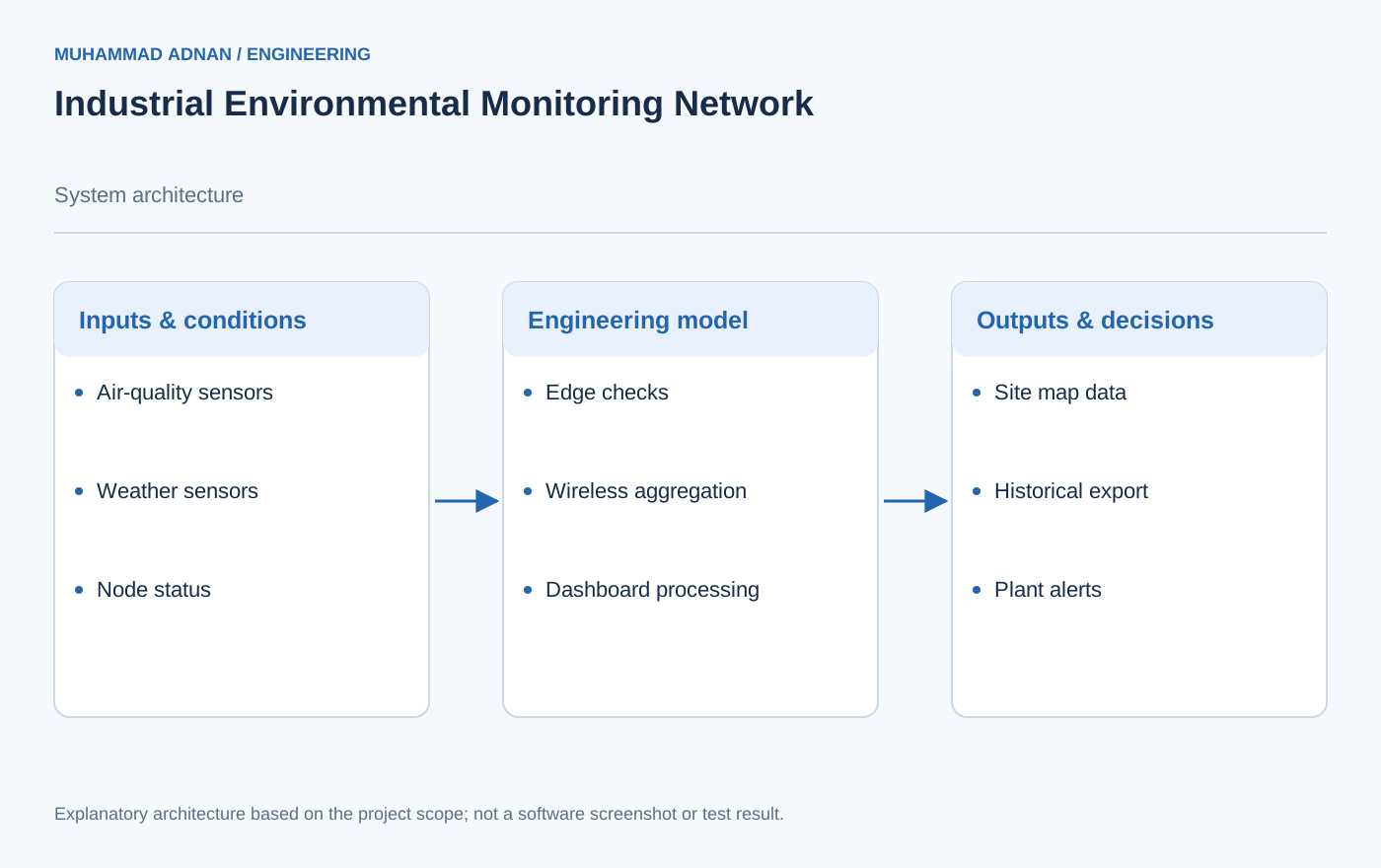
The record describes a distributed monitoring network. The visual explanation shows node-to-dashboard flow and does not supply independent lifetime or coverage measurements.
The engineering challenge
Collect geographically distributed environmental observations with constrained node energy and network bandwidth.
Engineering approach
- Combine sensing and local outlier checks within each remote node.
- Aggregate wireless observations through gateways and dashboard services.
- Expose history and event states to the stated industrial integration path.
Features & capabilities
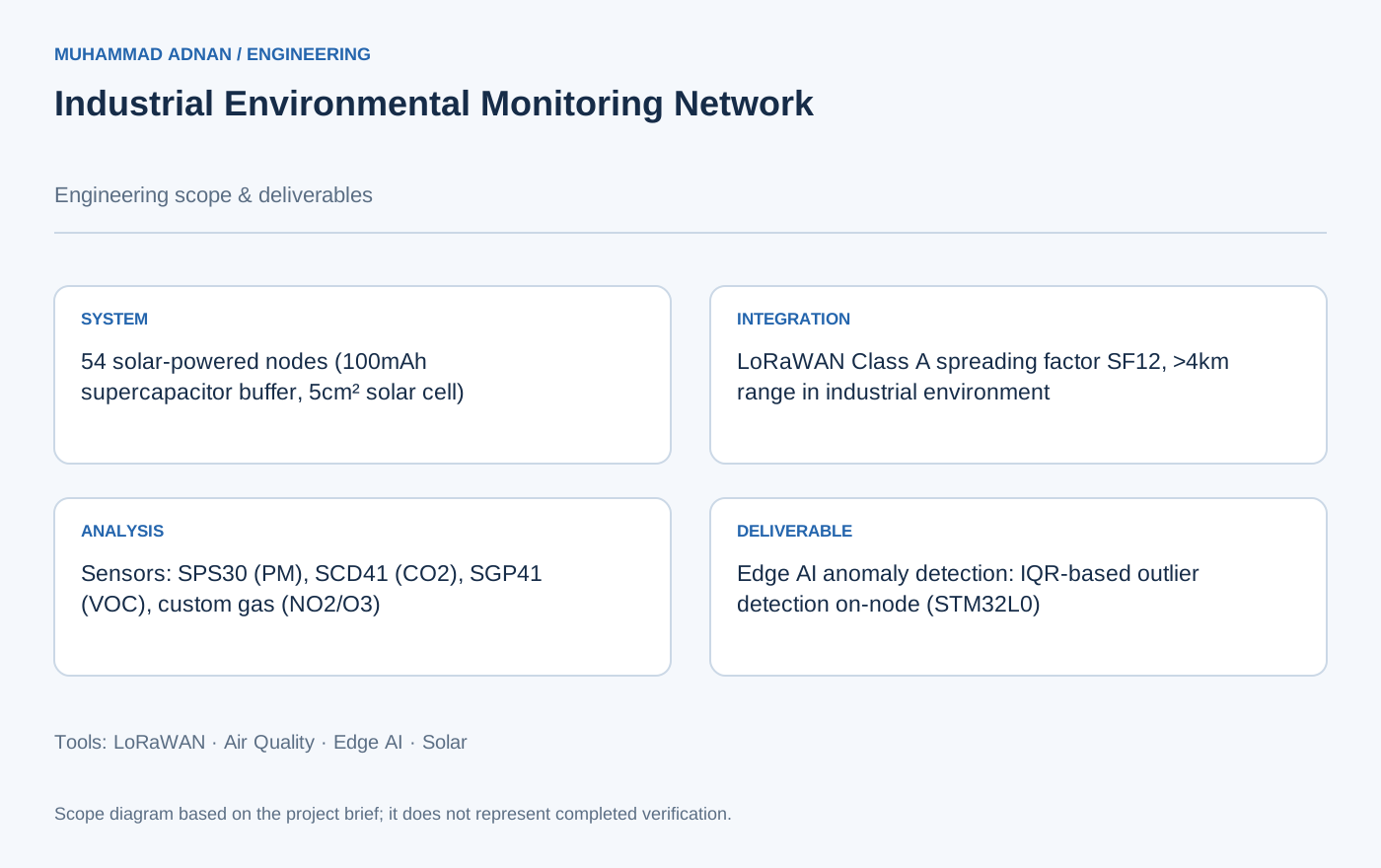
- 54 solar-powered nodes (100mAh supercapacitor buffer, 5cm² solar cell)
- LoRaWAN Class A spreading factor SF12, >4km range in industrial environment
- Sensors: SPS30 (PM), SCD41 (CO2), SGP41 (VOC), custom gas (NO2/O3)
- Edge AI anomaly detection: IQR-based outlier detection on-node (STM32L0)
- Real-time dashboard with GIS map overlay and heatmap generation
- SCADA integration via OPC-UA to plant control systems
- Automated alert generation: SMS, email, and plant PA system
- Historical data export: CSV, Excel, and Grafana visualization
Software & engineering tools
LoRa SX1276, STM32L073RZ, SPS30, SCD41, custom solar harvesting MPPT PCB, The Things Network