Project brief
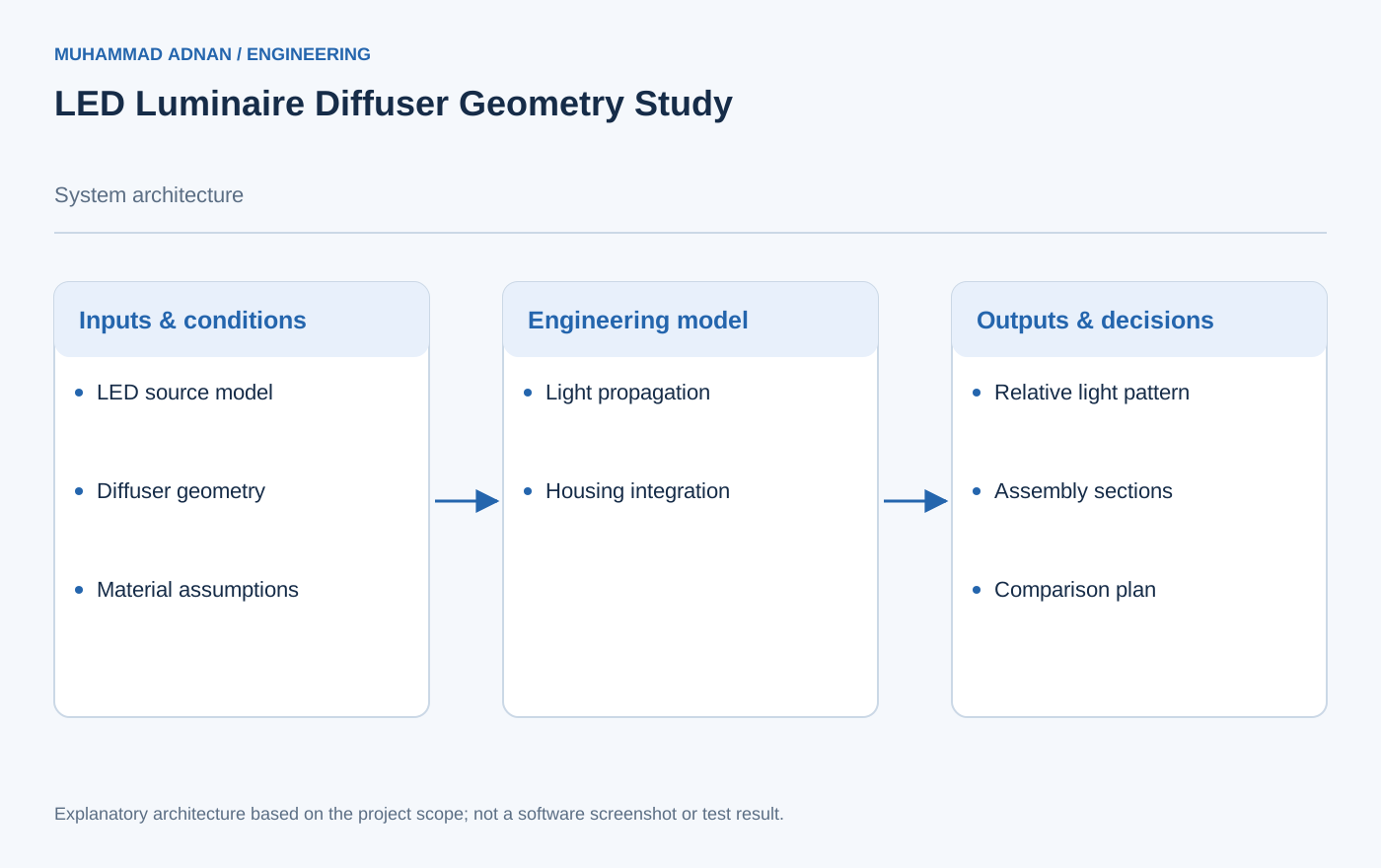
This concept would explore a compact LED task light through the interaction of emitter layout, diffuser geometry, and mechanical packaging. The study would compare a few simple diffuser profiles using stated source models rather than assume a proprietary optical material. A sectioned CAD assembly would show LED placement, diffuser retention, wiring access, and a heat-spreading path. Optical modeling would focus on relative illumination patterns and sensitivity to spacing, while a bench plan would use repeatable camera settings and a reference grid. Proposed deliverables include layout variants, modeling assumptions, and a qualitative prototype comparison. No glare rating, photometric classification, or measured illumination uniformity is claimed until appropriate testing is completed.
Design concept developed for this portfolio. The diagrams describe the proposed system; implementation and testing are part of the validation plan.
The engineering challenge
Reduce obvious bright spots while balancing optical spacing, housing depth, thermal access, and assembly simplicity.
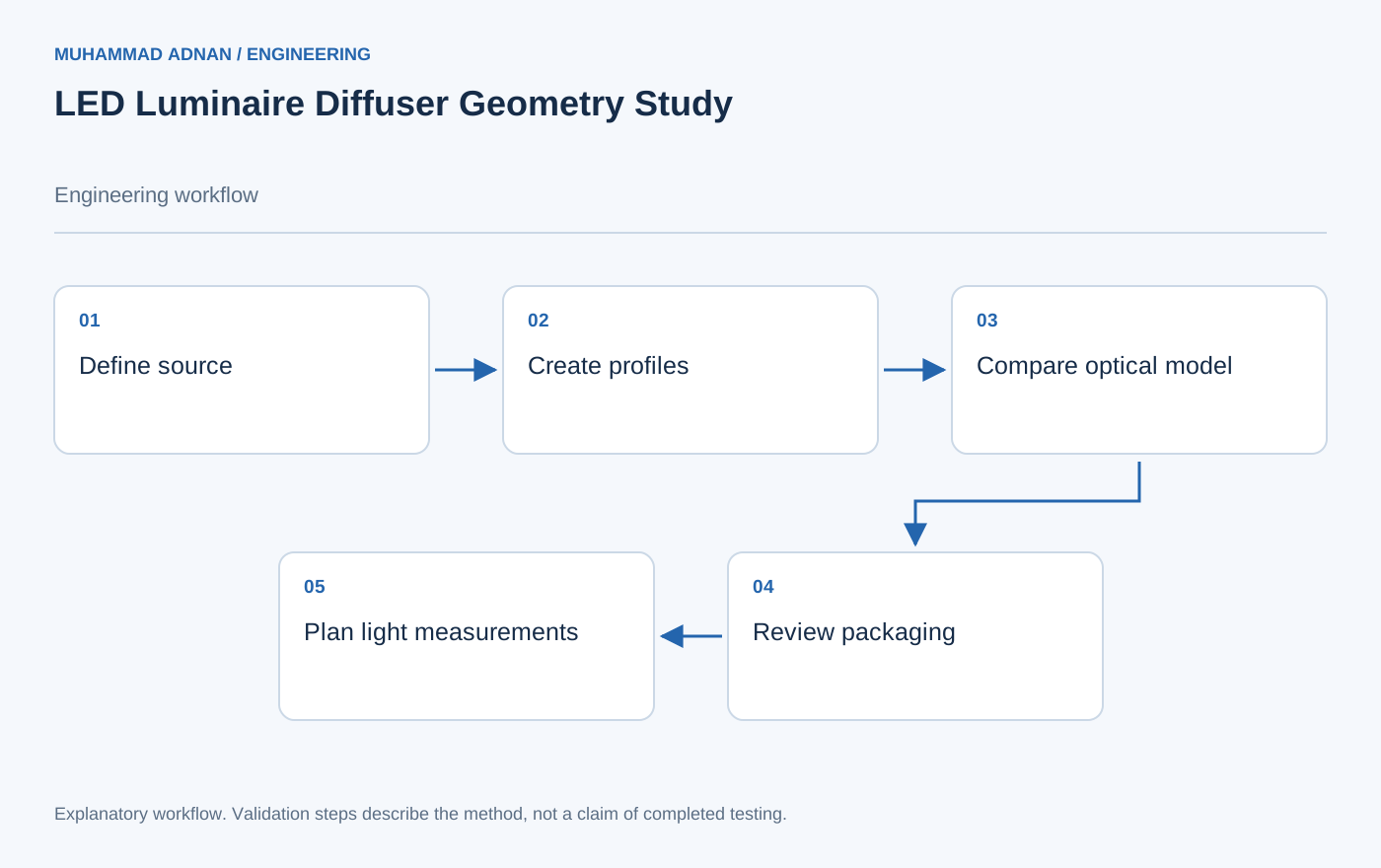
Engineering approach
- Define emitter layout and candidate diffuser assumptions.
- Compare spacing and profile variants.
- Review retention features and heat-spreader packaging.
- Plan controlled visual and illuminance comparisons.
Validation plan
- Use identical source settings for all prototype comparisons.
- Measure a common reference grid with the same instrument geometry.
- Record diffuser material and camera exposure with every image.
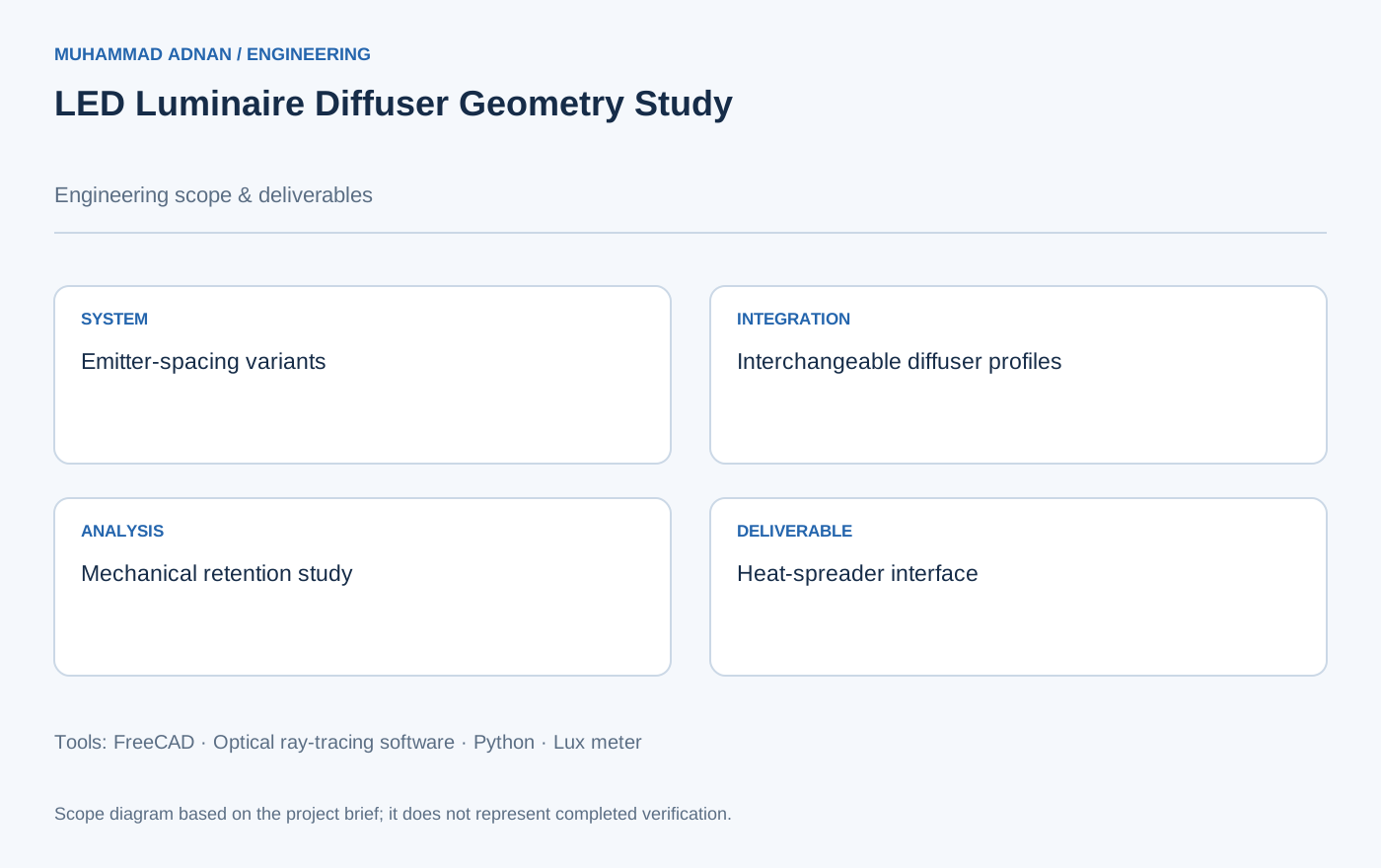
Concept scope
- Emitter-spacing variants
- Interchangeable diffuser profiles
- Mechanical retention study
- Heat-spreader interface
- Reference-grid comparison
Software & engineering tools
FreeCAD, Optical ray-tracing software, Python, Lux meter