
Project brief
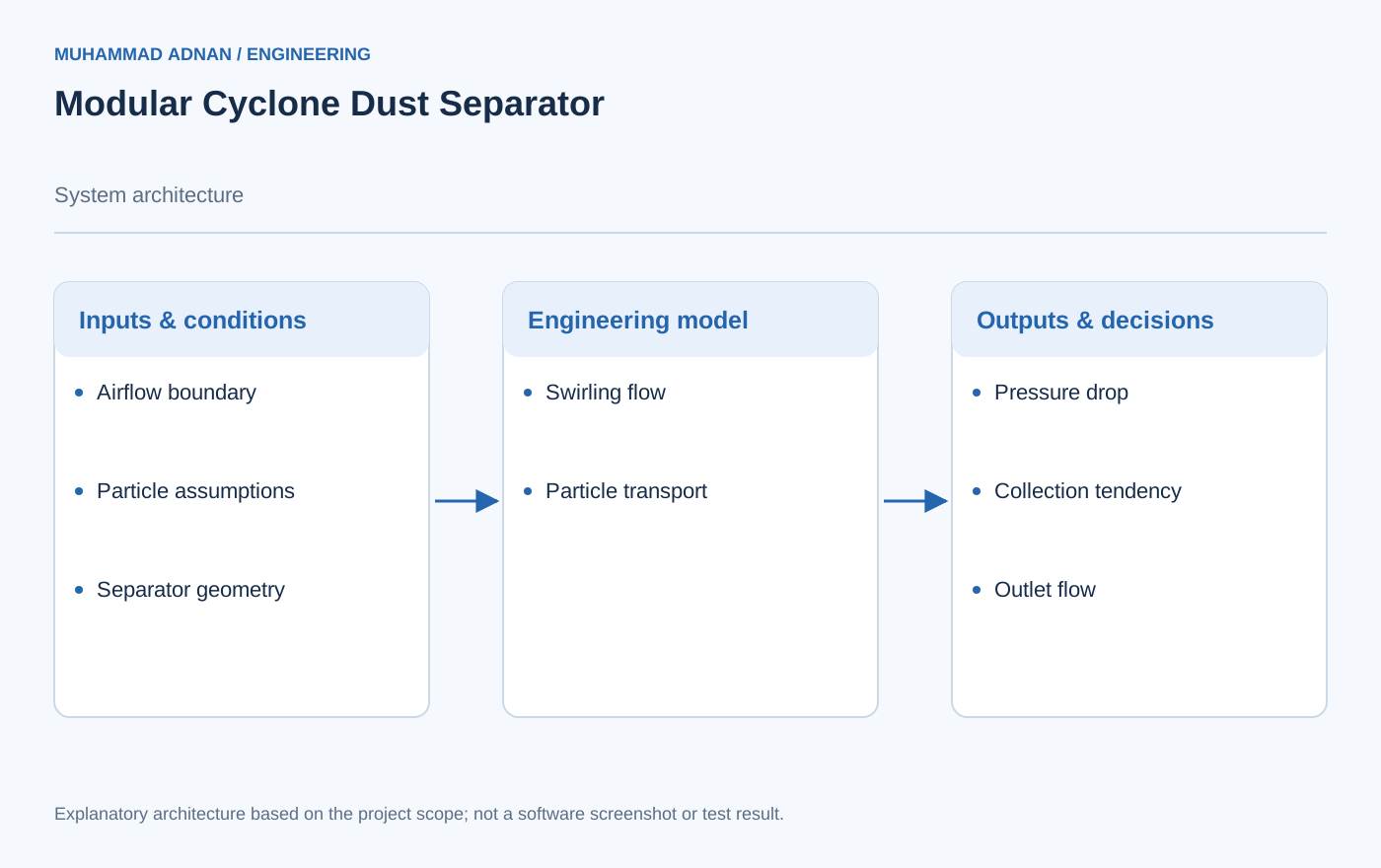
This concept would investigate the geometry and packaging of a compact cyclone pre-separator for a workshop extraction system. The study would treat flow rate, inlet geometry, and particle assumptions as explicit inputs rather than assuming a universal separation efficiency. CAD variants would explore a detachable cone, sealed collection-bin connection, and access for clearing accumulated material. A fluid model would compare pressure-drop tendencies and internal flow organization, followed by a bench plan using suitable inert test material. The proposed deliverables are a modular assembly, a documented set of modeling assumptions, and a prototype evaluation protocol. It would remain a preliminary mechanical and fluid-design exercise, with no claim about hazardous dust collection, filtration performance, or production readiness.
Design concept developed for this portfolio. The diagrams describe the proposed system; implementation and testing are part of the validation plan.
The engineering challenge
Explore useful particle separation while controlling pressure drop, leakage, and cleanout access.
Engineering approach
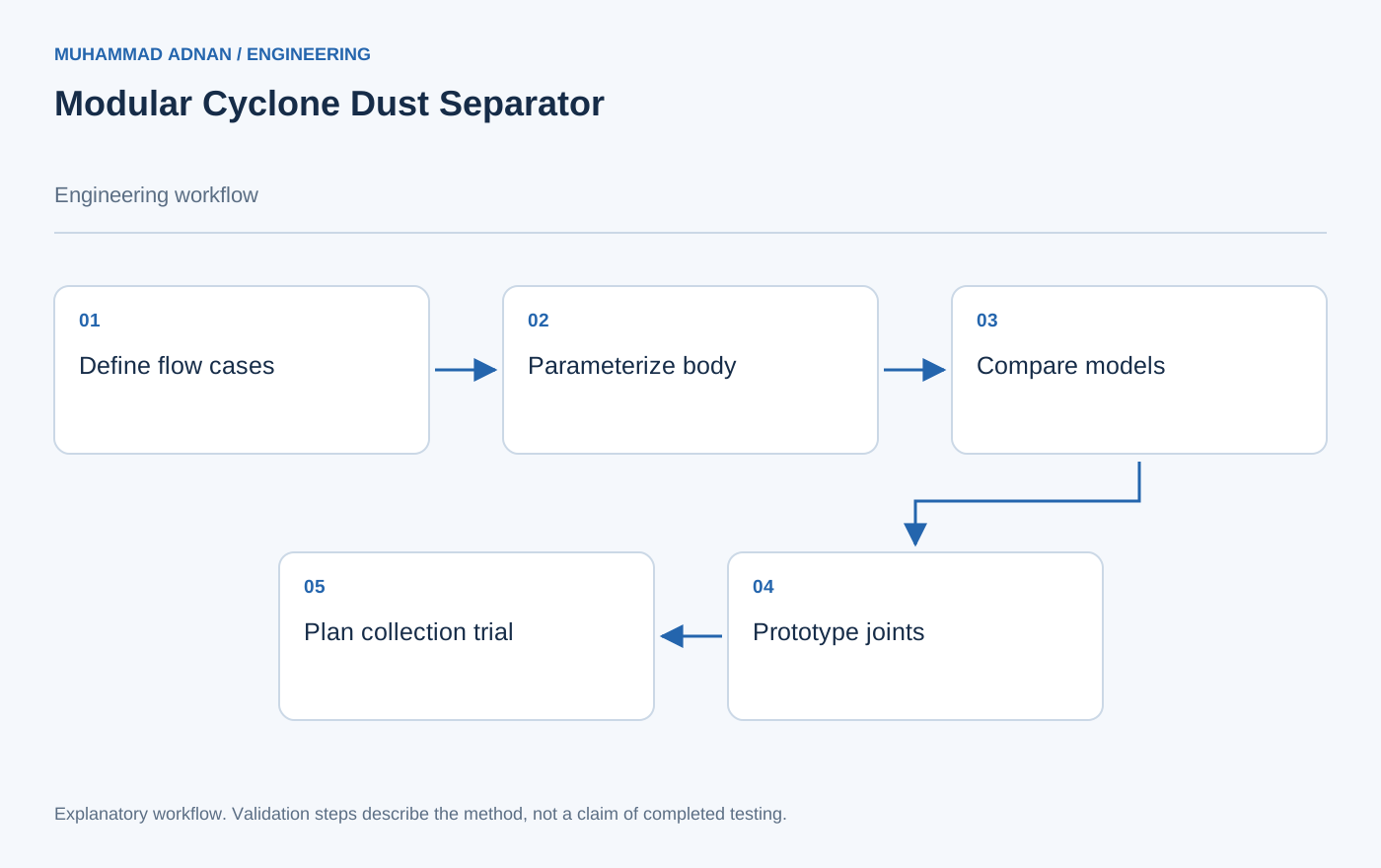
- Define airflow and representative nonhazardous particle assumptions.
- Parameterize inlet, cylinder, and cone geometry.
- Compare flow organization and pressure-drop tendencies.
- Plan sealed-joint and collection-bin prototype checks.
Validation plan
- Check enclosure leakage before particle testing.
- Compare pressure measurements with modeled tendencies.
- Record collection behavior using controlled inert material.
Concept scope
- Detachable cone section
- Sealed bin adapter
- Parameterized inlet
- Inspection access
- Pressure-tap locations
Software & engineering tools
FreeCAD, OpenFOAM, ParaView, Differential pressure sensor