
Project brief
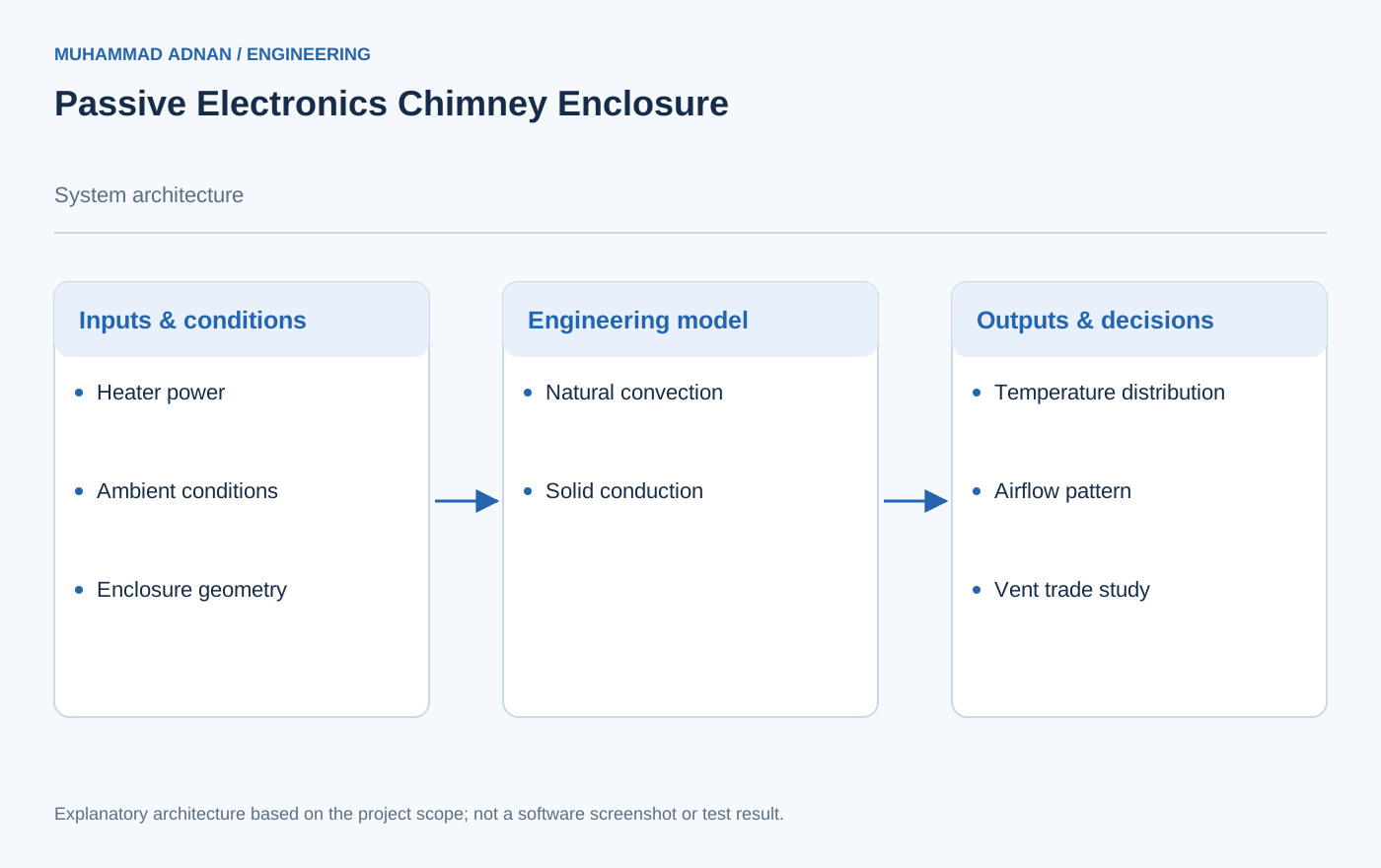
This proposed study would explore passive cooling for a small electronics enclosure using a vertical air path. The model would use representative heater blocks rather than assume a specific processor package, allowing the relationship between vent placement, board orientation, and internal obstructions to be examined. CAD variants would compare a straight chimney with a baffled arrangement while preserving connector access and serviceability. Natural-convection calculations would provide initial expectations before a fluid model is built. The proposed bench setup would use safe low-voltage heaters, temperature sensors, and ambient observations. Deliverables would include an enclosure study, thermal assumptions, and a validation plan. No fanless power rating or demonstrated operating temperature is claimed at this stage.
Design concept developed for this portfolio. The diagrams describe the proposed system; implementation and testing are part of the validation plan.
The engineering challenge
Create a useful buoyancy-driven air path while accommodating boards, connectors, and service access.
Engineering approach
- Estimate heat loads and natural-convection scales.
- Parameterize vent areas and internal obstructions.
- Compare enclosure orientations and ambient cases.
- Plan a heater-and-sensor prototype experiment.
Validation plan
- Check model energy balance and mesh sensitivity.
- Measure steady temperatures across repeated ambient conditions.
- Use qualitative flow visualization to inspect major recirculation regions.
Concept scope
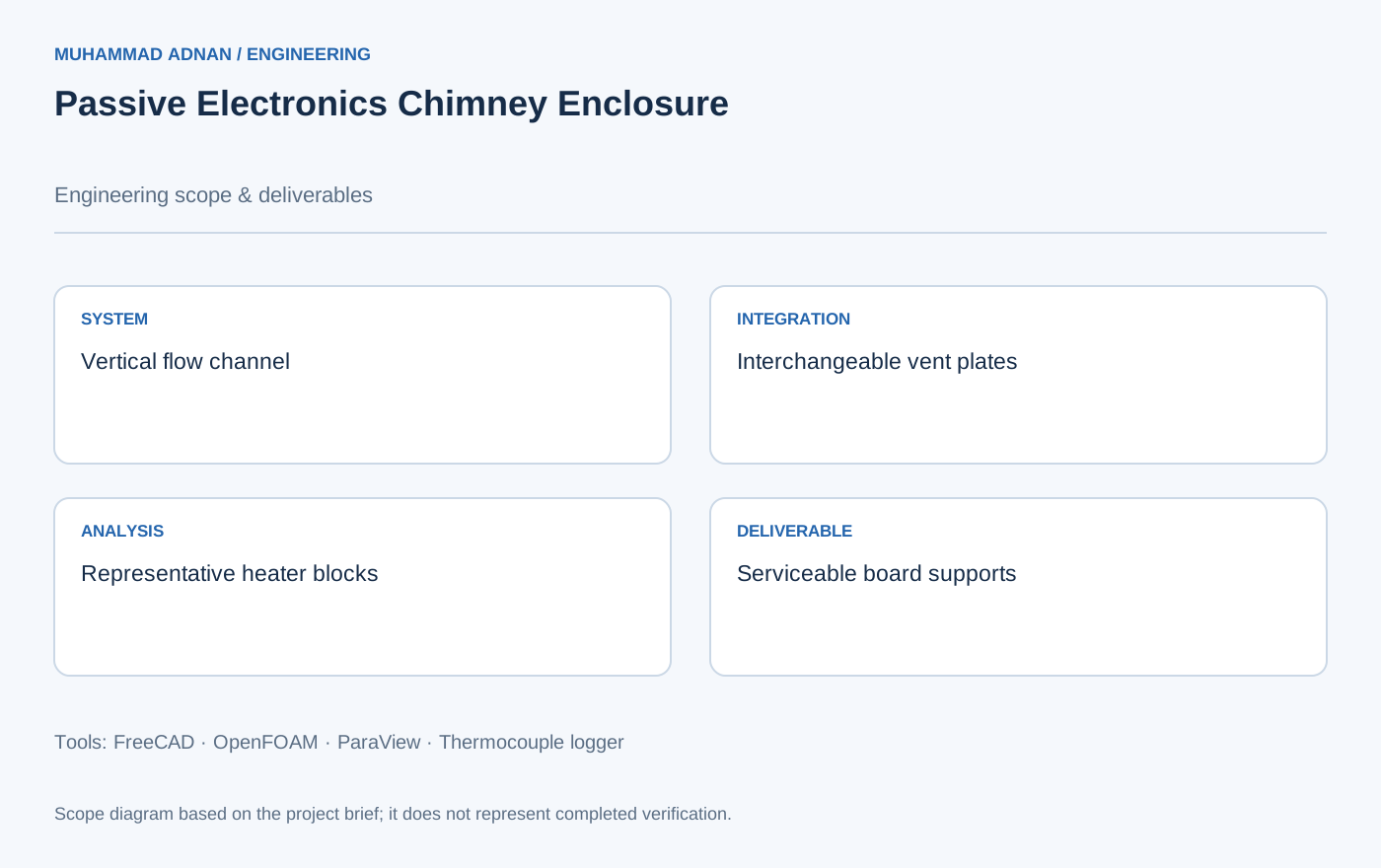
- Vertical flow channel
- Interchangeable vent plates
- Representative heater blocks
- Serviceable board supports
- Ambient sensitivity study
Software & engineering tools
FreeCAD, OpenFOAM, ParaView, Thermocouple logger