
Project brief
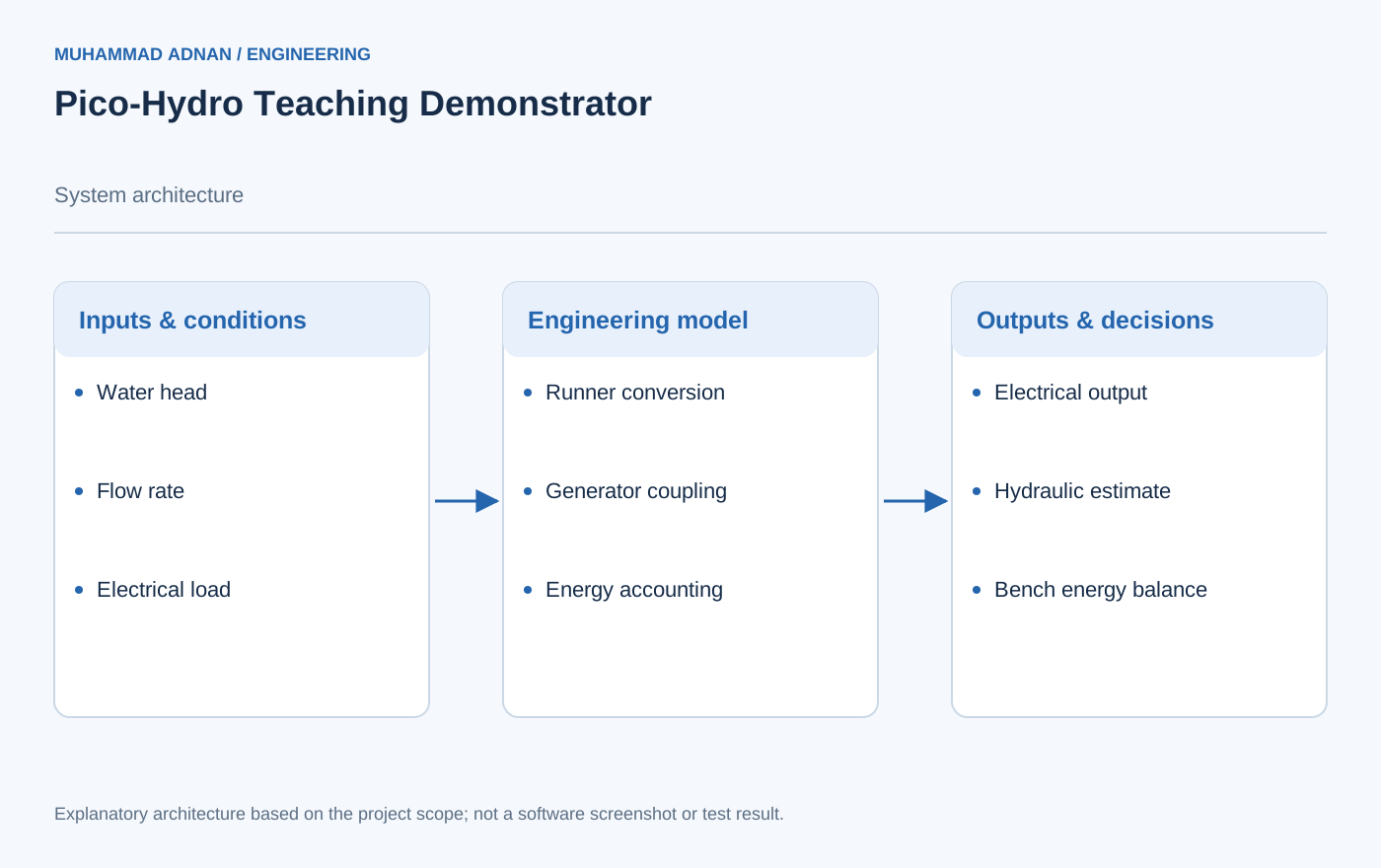
This proposed demonstrator would use a recirculating water bench to explain the relationship between hydraulic input and small-turbine electrical output. The concept would include a reservoir, controlled flow path, interchangeable nozzle or runner arrangement, and an instrumented low-voltage generator load. The energy consumed by the recirculation pump would be recorded separately so the bench is never presented as a net-energy source. CAD work would focus on splash containment, service access, and alignment between runner and generator. Proposed deliverables include the bench architecture, power-balance equations, and a controlled experiment plan. Turbine efficiency and electrical output would remain quantities to measure, with no renewable-generation performance asserted from the unbuilt concept.
Design concept developed for this portfolio. The diagrams describe the proposed system; implementation and testing are part of the validation plan.
The engineering challenge
Make the hydraulic-to-electrical energy path measurable while separating it from the power used to recirculate water.
Engineering approach
- Define head and flow measurement points.
- Compare interchangeable nozzle and runner layouts.
- Instrument generator load and recirculation input separately.
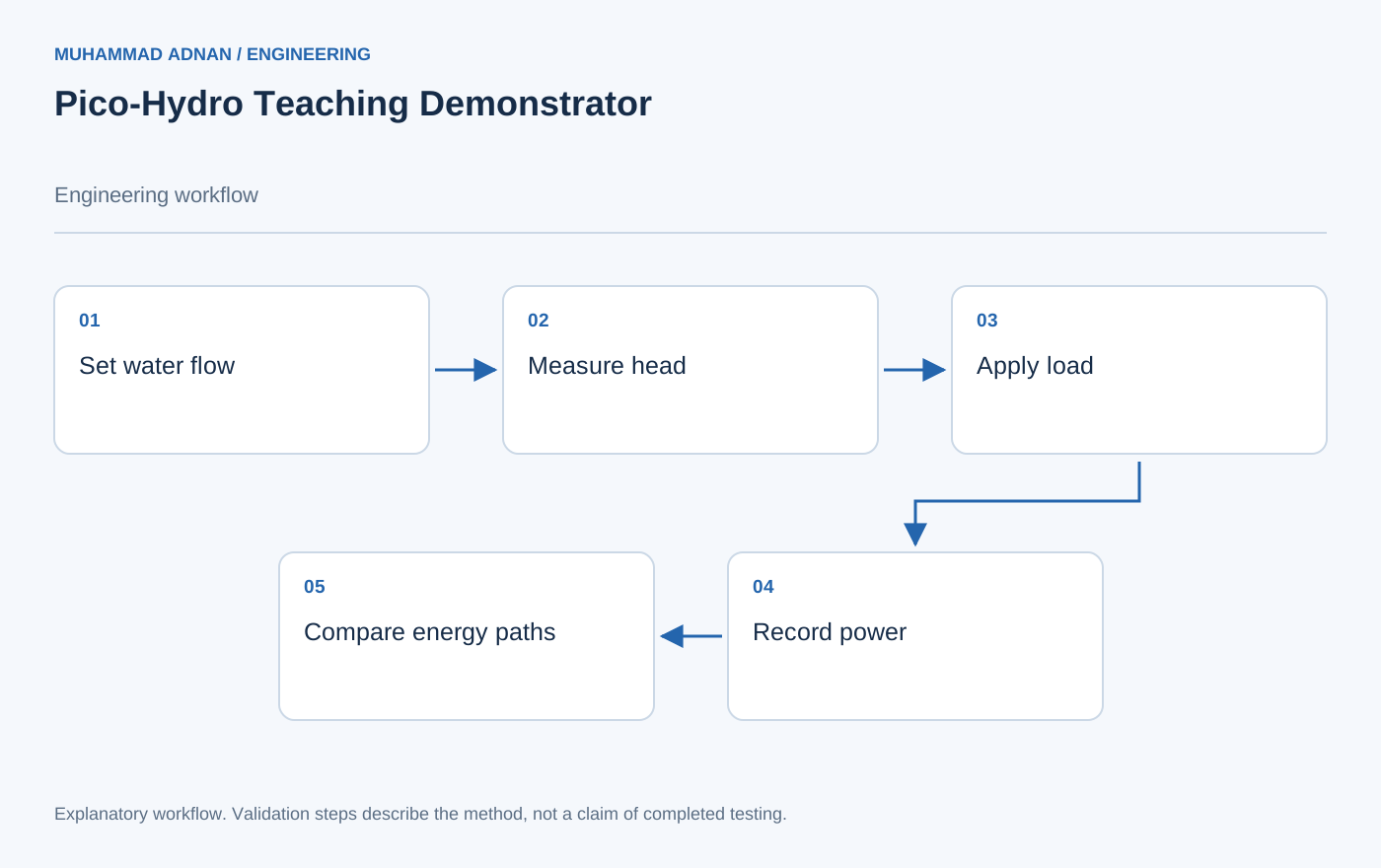
- Plan power-balance experiments using controlled settings.
Validation plan
- Check sensor zero points before each experiment.
- Compare steady hydraulic input with generator output.
- Record pump energy separately and retain it in every report.
Concept scope
- Recirculating water loop
- Interchangeable runner concept
- Flow and head measurement
- Low-voltage load bank
- Explicit pump-energy accounting
Software & engineering tools
FreeCAD, Python, Flow meter, Pressure sensor, Electrical power logger