Project brief
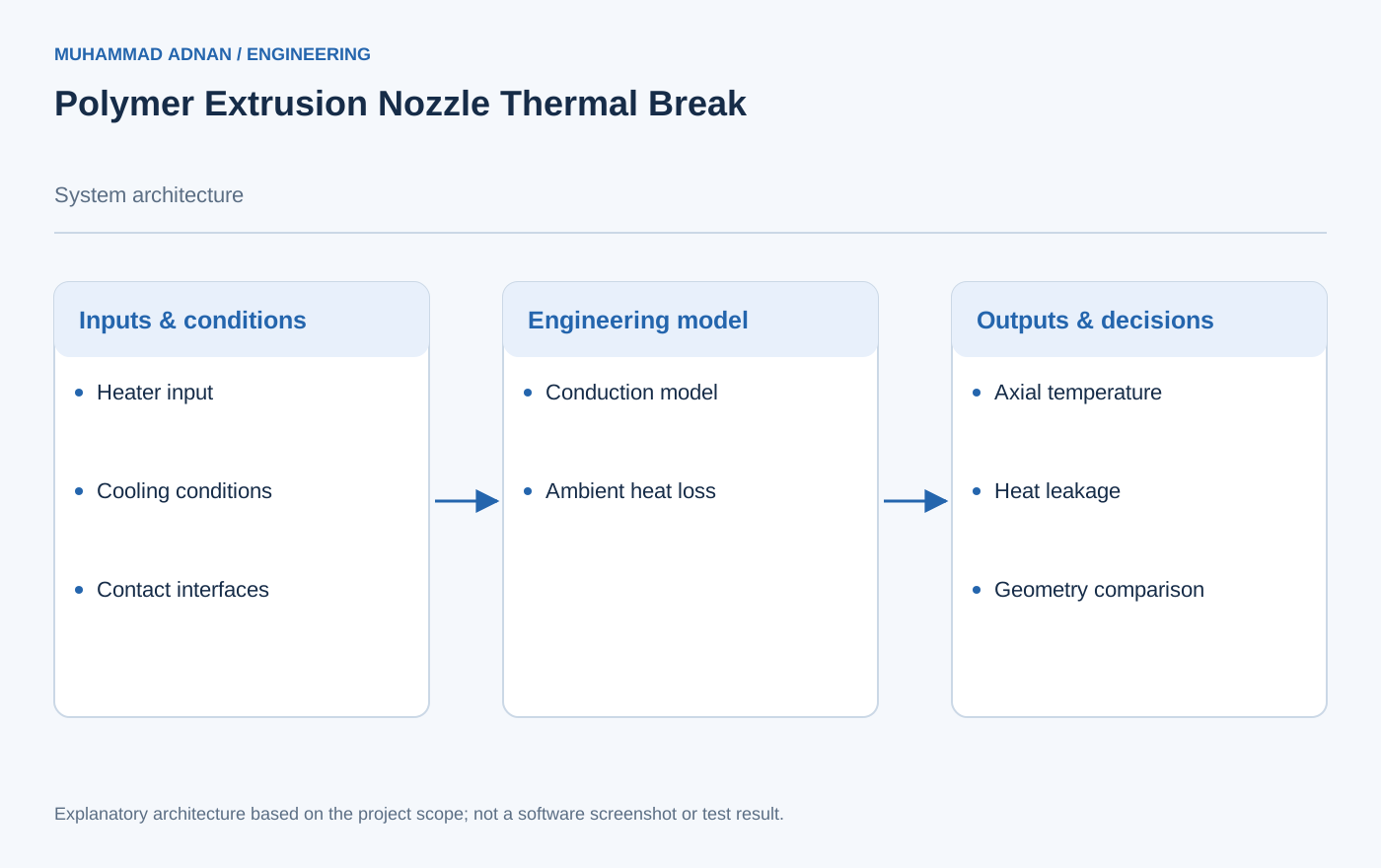
This proposed study would explore the thermal transition between a heated polymer-extrusion nozzle and its cooler feed section. The purpose is to compare geometry and interface choices in a small teaching-scale assembly, not to claim compatibility with every polymer. A model would separate heater input, conduction through the thermal break, ambient losses, and the influence of cooling around the feed region. CAD variants would consider thin-section manufacturability, wrench access, replaceable nozzles, and temperature-sensor placement. The deliverables would include a sectioned assembly, thermal assumptions, and a heater-based bench plan. Initial evaluation would characterize temperatures without extrusion; flow quality and material behavior would require a later, explicitly defined process study.
Design concept developed for this portfolio. The diagrams describe the proposed system; implementation and testing are part of the validation plan.
The engineering challenge
Maintain a useful thermal separation while keeping a slender part manufacturable and the nozzle serviceable.
Engineering approach
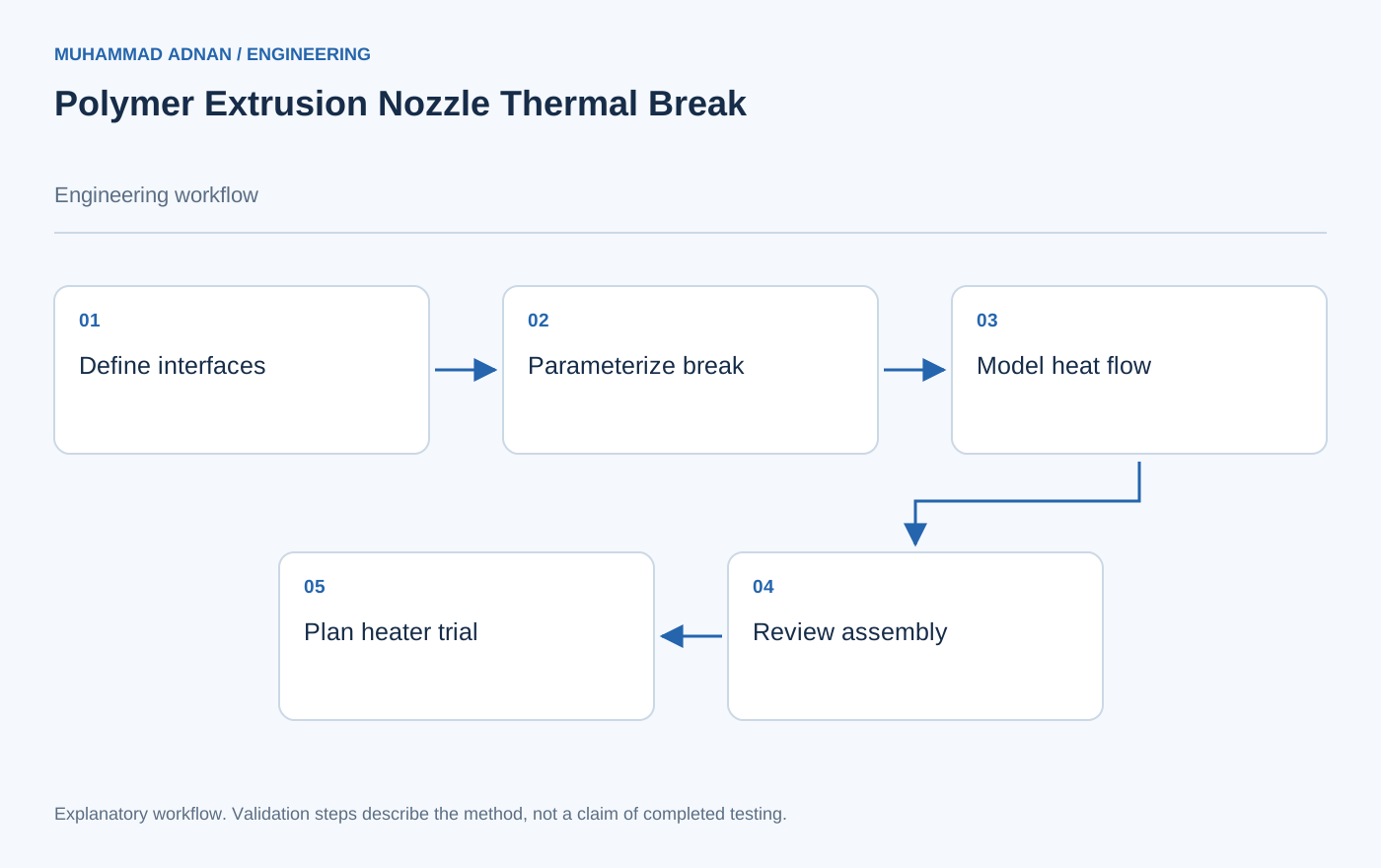
- Define heater, contact, and cooling boundary assumptions.
- Compare thermal-break cross-sections and material candidates.
- Review assembly preload and tool access.
- Plan temperature measurements before extrusion trials.
Validation plan
- Check thermal energy balance and contact sensitivity.
- Measure temperatures at defined axial locations.
- Inspect assembly consistency after controlled thermal cycling.
Concept scope
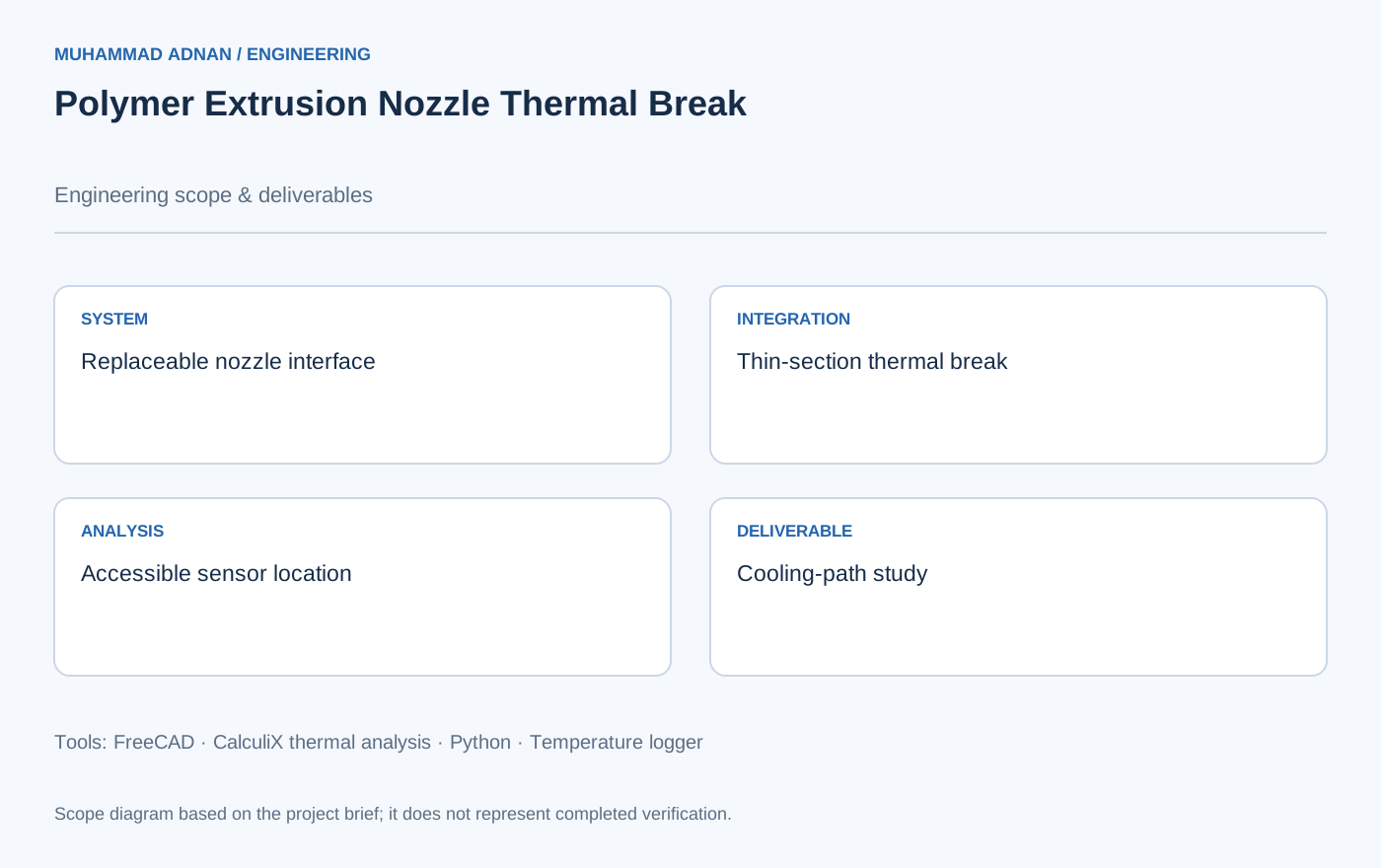
- Replaceable nozzle interface
- Thin-section thermal break
- Accessible sensor location
- Cooling-path study
- Assembly cross-section
Software & engineering tools
FreeCAD, CalculiX thermal analysis, Python, Temperature logger