
Project brief
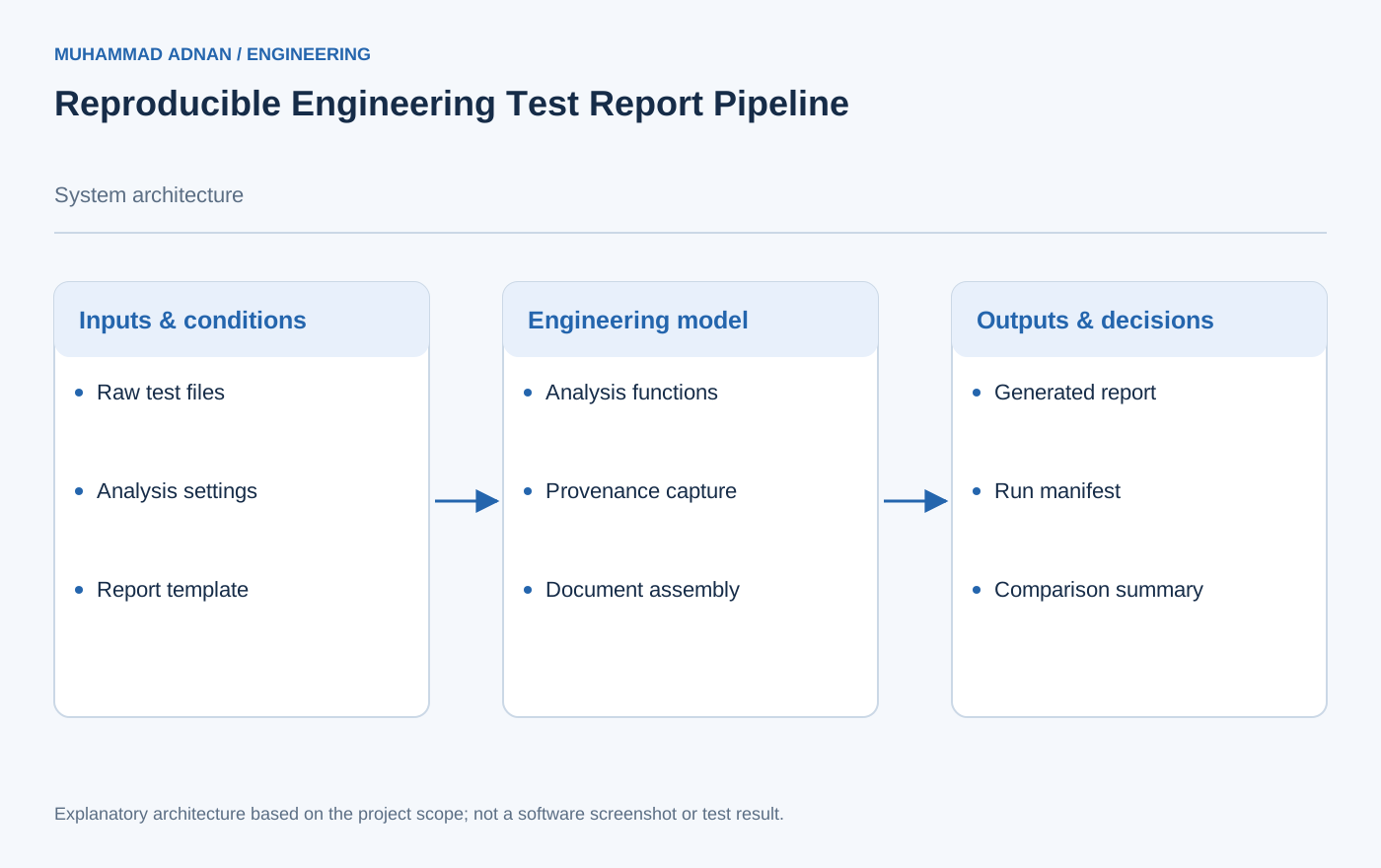
This proposed tool would organize the path from raw bench-test data to a reviewable engineering report. Each analysis run would record input files, parameter selections, software version, and generated outputs in a small manifest. The report builder would assemble methods, tables, and figure references without inventing observations or hiding missing inputs. A demonstration dataset would be clearly synthetic and would exercise normal runs, incomplete measurements, and changed analysis settings. The focus is reproducibility and provenance rather than a particular test discipline. Proposed deliverables include an analysis-run format, a report template, and a comparison view for successive runs. Any later production use would require discipline-specific methods and acceptance criteria supplied by the responsible engineering team.
Design concept developed for this portfolio. The diagrams describe the proposed system; implementation and testing are part of the validation plan.
The engineering challenge
Keep report conclusions connected to the exact inputs and analysis settings used to produce them.
Engineering approach
- Define a manifest for files, parameters, and outputs.
- Separate data processing from report presentation.
- Expose missing inputs and changed assumptions.
- Demonstrate repeatable builds with synthetic fixtures.
Validation plan
- Rebuild a report from its saved manifest and compare outputs.
- Confirm missing measurements produce visible gaps.
- Change one parameter and verify the comparison identifies its effect.
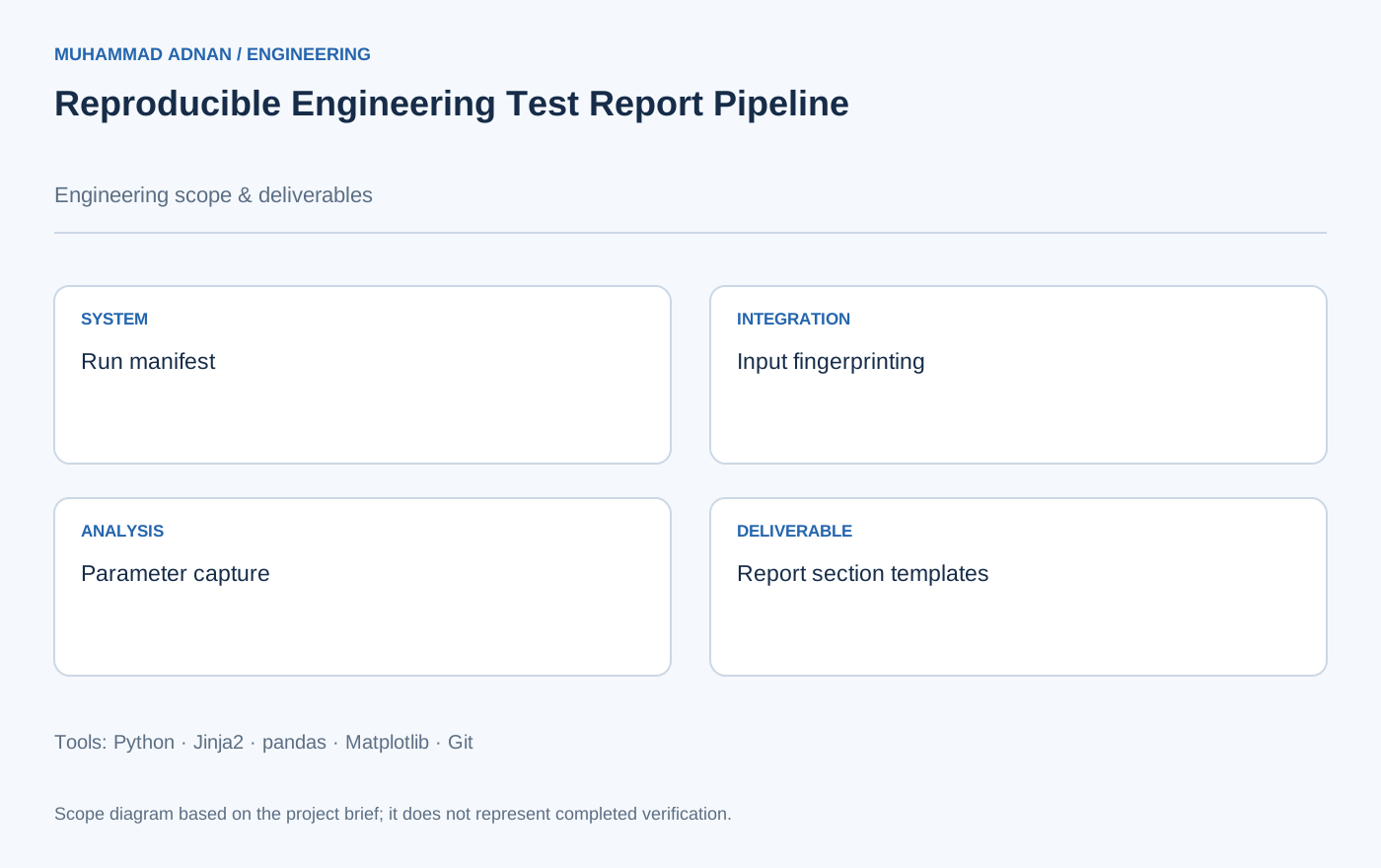
Concept scope
- Run manifest
- Input fingerprinting
- Parameter capture
- Report section templates
- Run-to-run comparison
Software & engineering tools
Python, Jinja2, pandas, Matplotlib, Git