Project brief
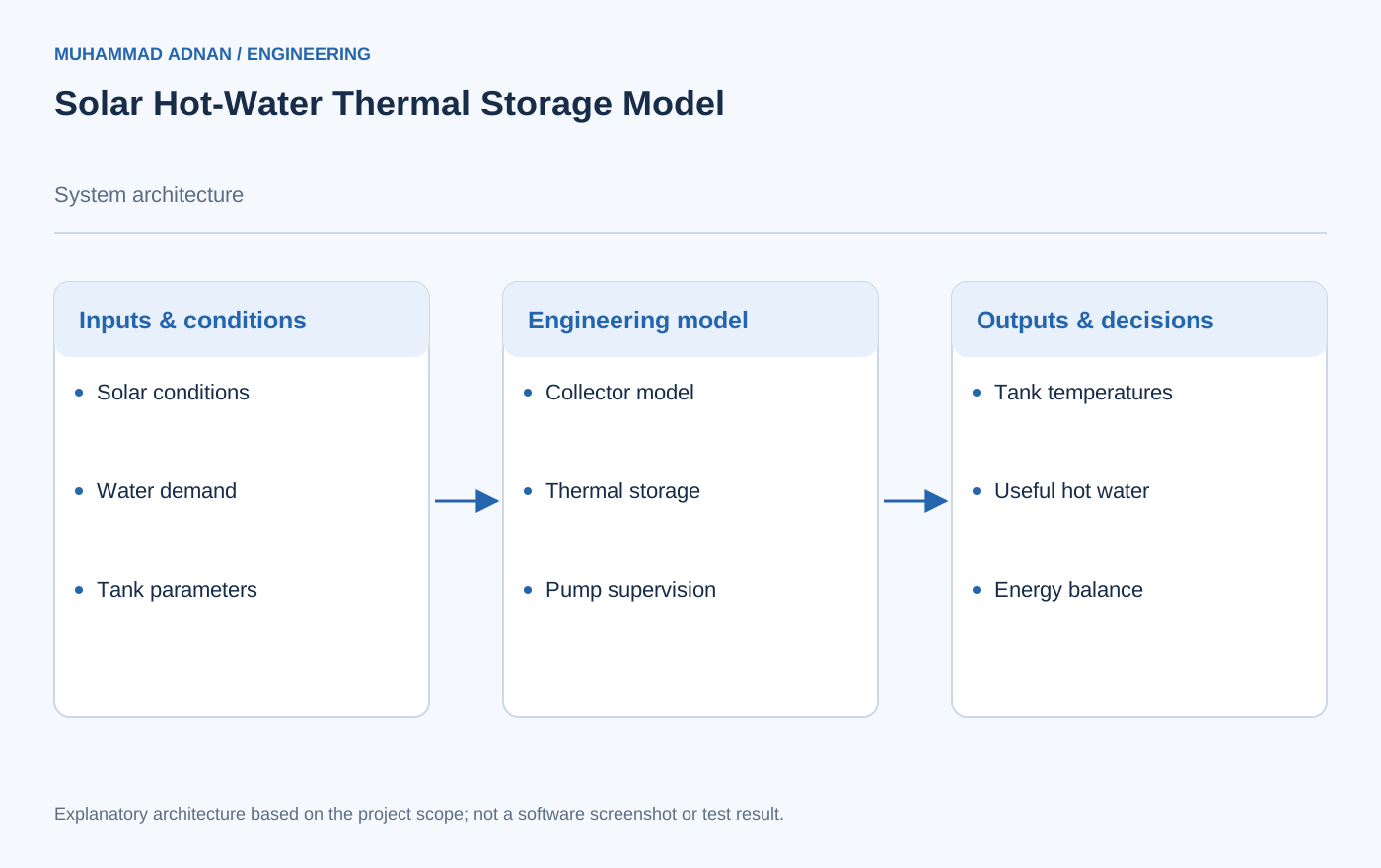
This concept would model a solar hot-water system at the level needed to compare collector assumptions, tank stratification, and demand timing. The study would use explicit weather and draw-profile inputs, with illustrative datasets clearly identified during interface development. A multi-node tank model would help explain why mixing and sensor location influence usable stored heat. The mechanical concept would show collector, heat-exchange loop, tank ports, and supervisory sensors, while leaving detailed plumbing design for a later phase. Proposed deliverables include the thermal model, operating-mode diagram, and sensitivity study. No household energy savings, installation suitability, or hot-water availability would be claimed until location, equipment, and measured operating conditions are established.
Design concept developed for this portfolio. The diagrams describe the proposed system; implementation and testing are part of the validation plan.
The engineering challenge
Represent stored heat usefully while accounting for stratification, heat loss, and changing draw demand.
Engineering approach
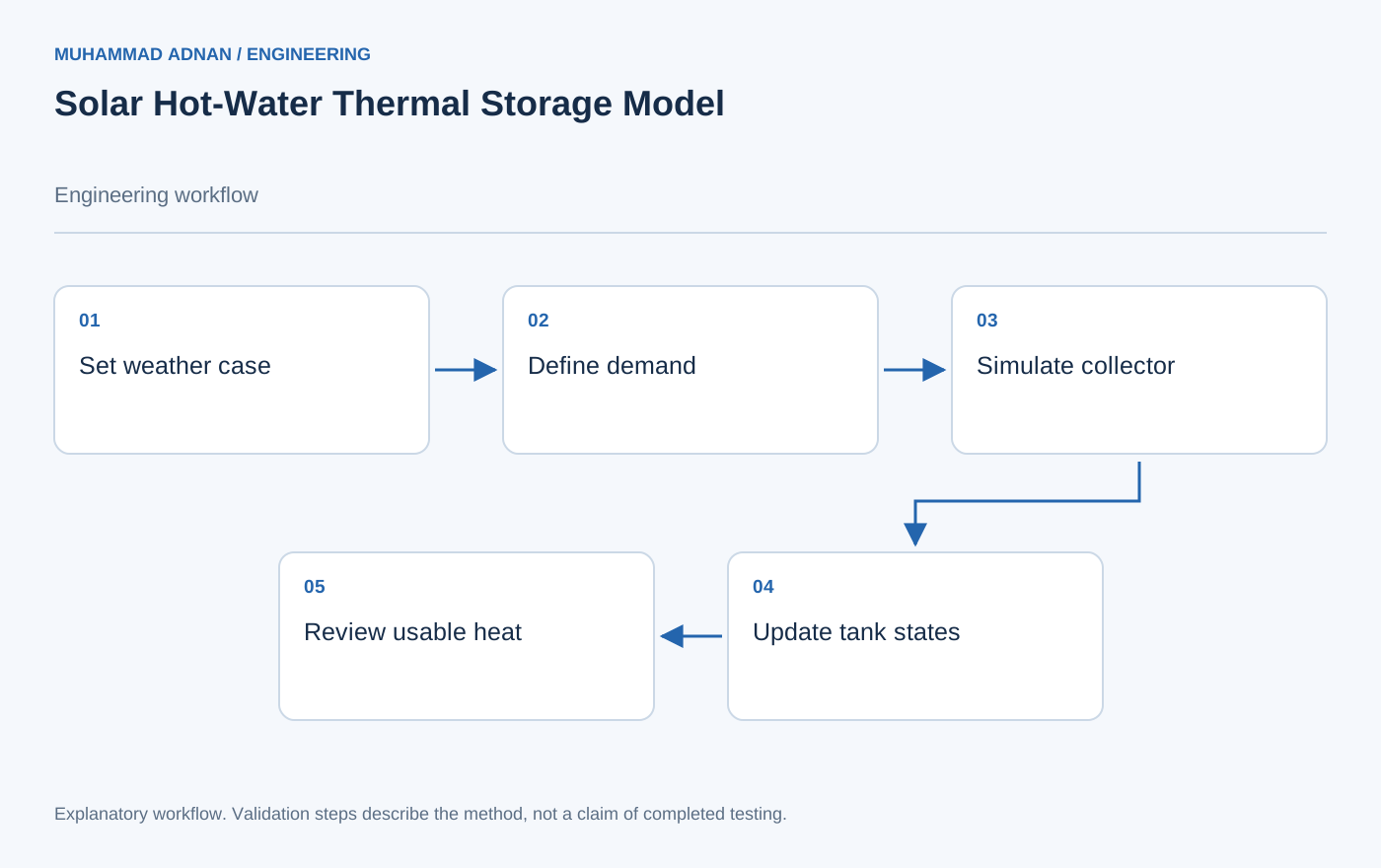
- Define collector and demand assumptions separately.
- Build a simple multi-node storage model.
- Compare sensor locations and pump-control logic.
- Track auxiliary heat and unmet demand explicitly.
Validation plan
- Check energy conservation under no-draw conditions.
- Compare a fully mixed limit with a single-node model.
- Use zero-solar and high-demand cases to inspect auxiliary-heat behavior.
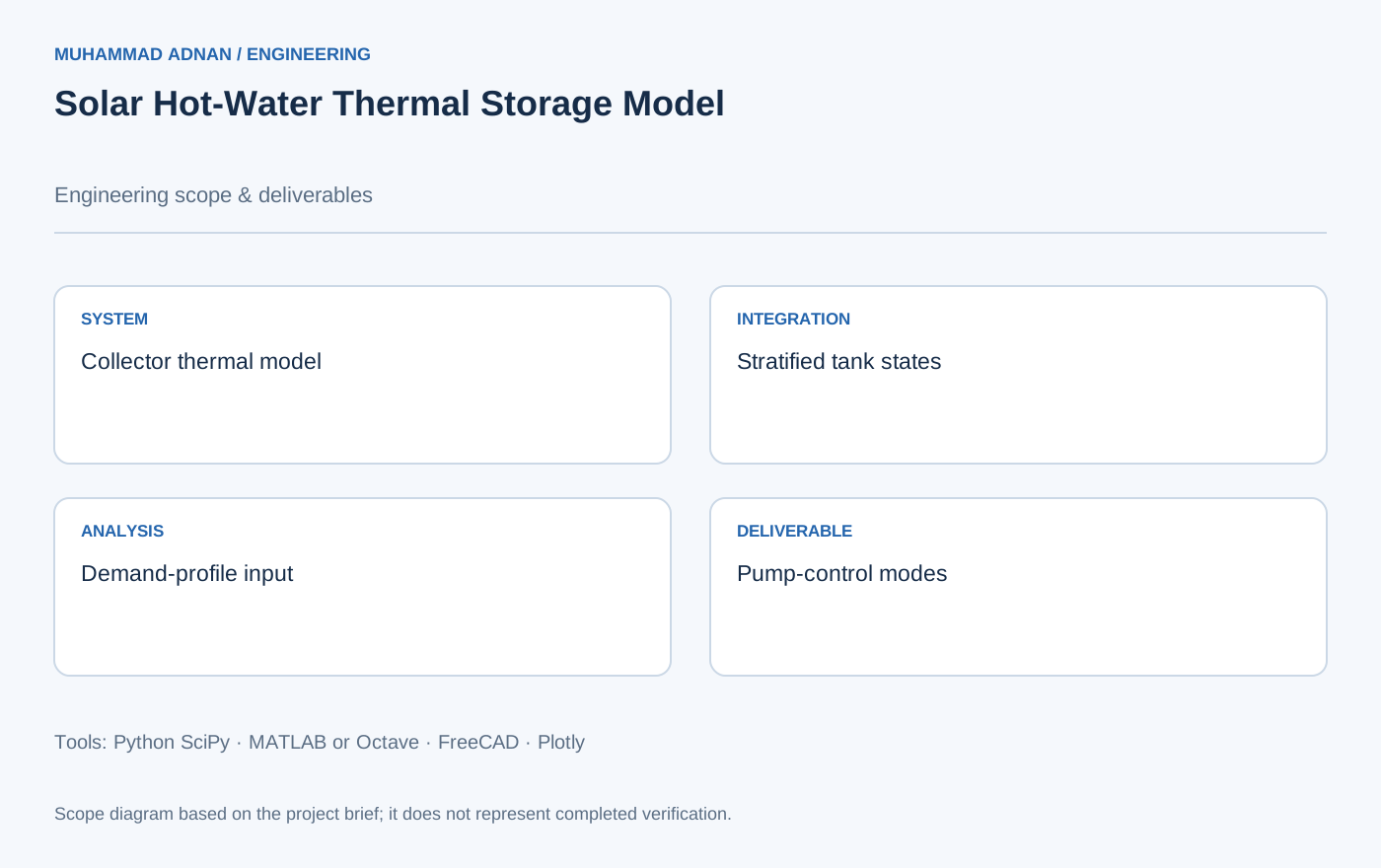
Concept scope
- Collector thermal model
- Stratified tank states
- Demand-profile input
- Pump-control modes
- Heat-balance accounting
Software & engineering tools
Python SciPy, MATLAB or Octave, FreeCAD, Plotly