
Project brief
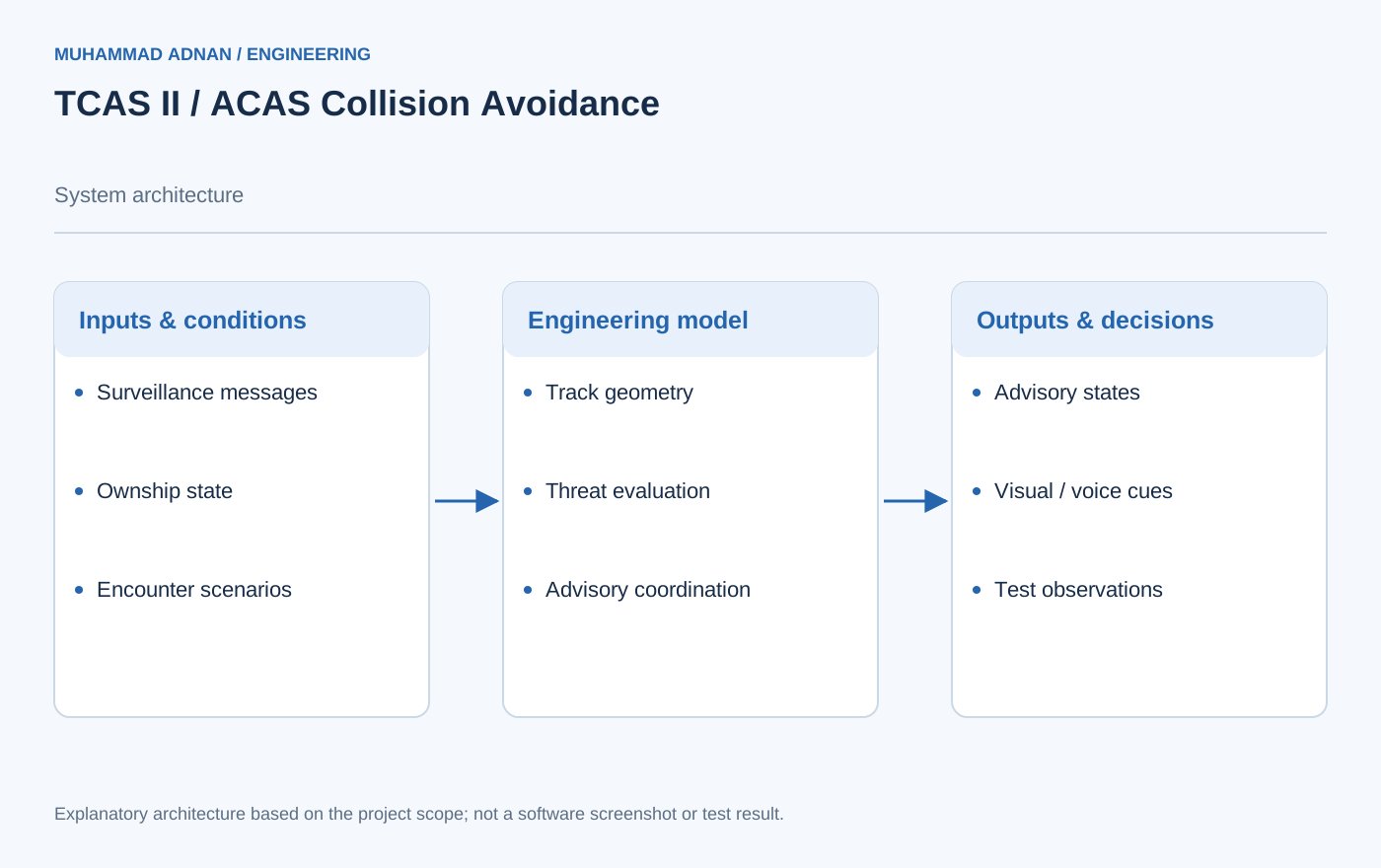
A research and development prototype implementing TCAS II threat logic per RTCA DO-185B. The system processes Mode S transponder replies, computes closure rates and collision prediction geometry, evaluates collision threats, coordinates resolution advisories with nearby TCAS-equipped aircraft, and issues cockpit voice and visual RAs. Software-defined radio enables flexible protocol testing.
The source identifies this as a research and development prototype. The expanded narrative preserves that context and does not imply an operationally approved collision-avoidance system.
The engineering challenge
Evaluate aircraft encounter geometry and coordinate advisory logic in a research prototype.
Engineering approach
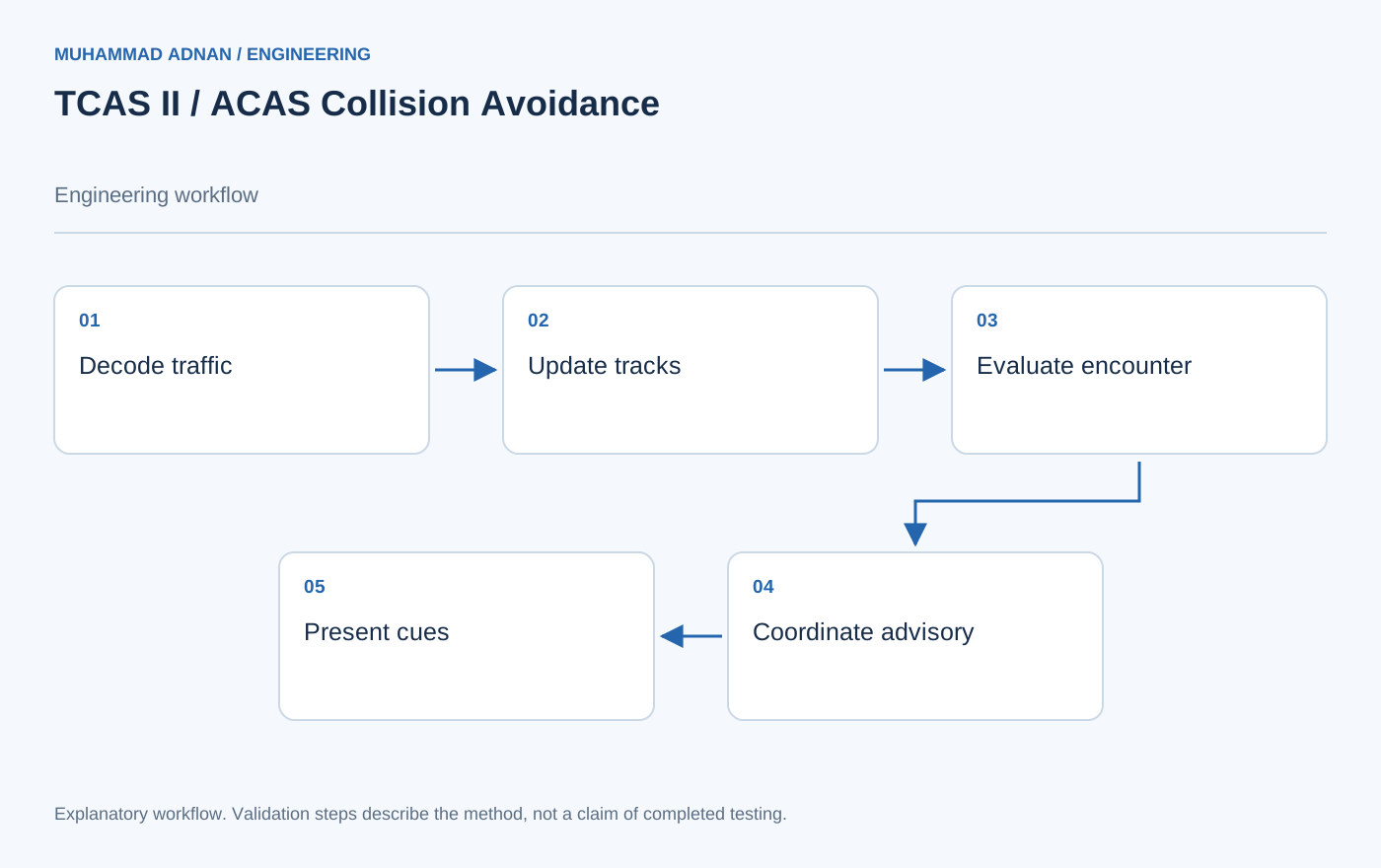
- Decode the stated surveillance inputs for encounter-state processing.
- Compute closure geometry and rank candidate threats.
- Apply coordination and inhibition logic before generating advisory outputs.
Features & capabilities
- Mode S 1090MHz interrogation and extended squitter decoding
- Closure rate computation using geometric CPA algorithm (DO-185B)
- Multi-threat evaluation with priority ranking (collision vs non-threat)
- TCAS RA coordination via Mode S data link (ATCRBS/Mode S hybrid)
- Resolution Advisory generation: CLIMB, DESCEND, MONITOR, MAINTAIN
- Coordinated RA logic — prevents two aircraft from both descending
- Inhibition logic at low altitude (below 1000ft AGL)
- Voice RA annunciation with adjustable strength commands
Software & engineering tools
USRP B210 SDR, GNU Radio, C++, Python analysis tools, DO-185B threat logic implementation