
Project brief
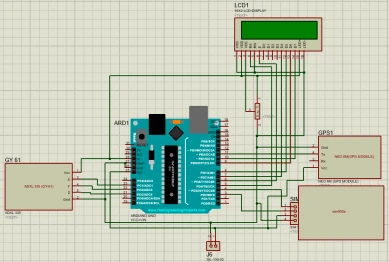
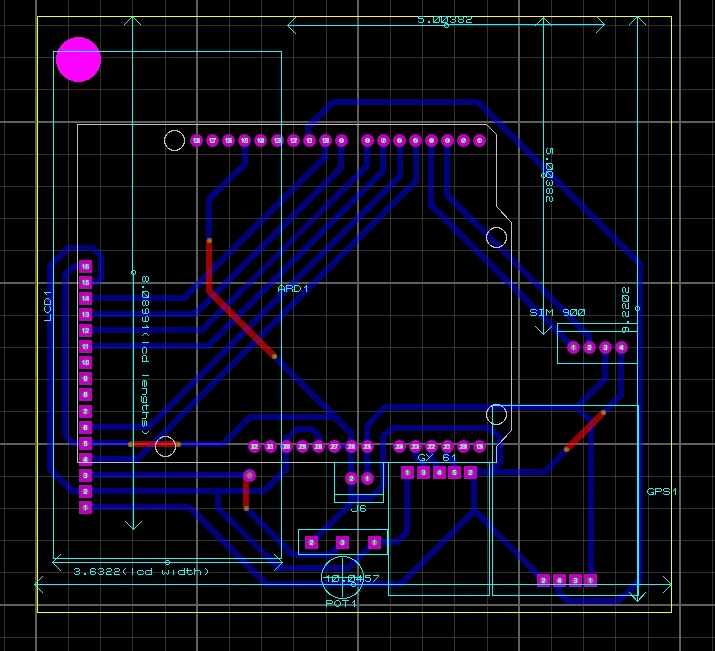
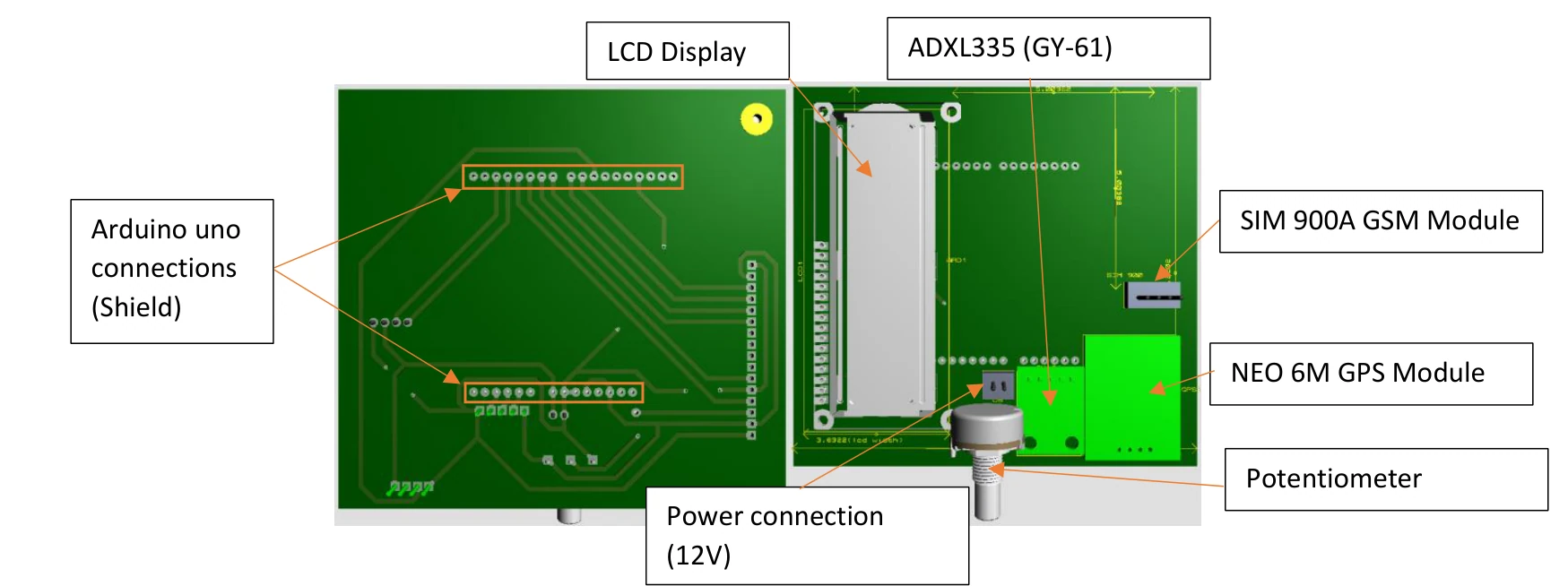
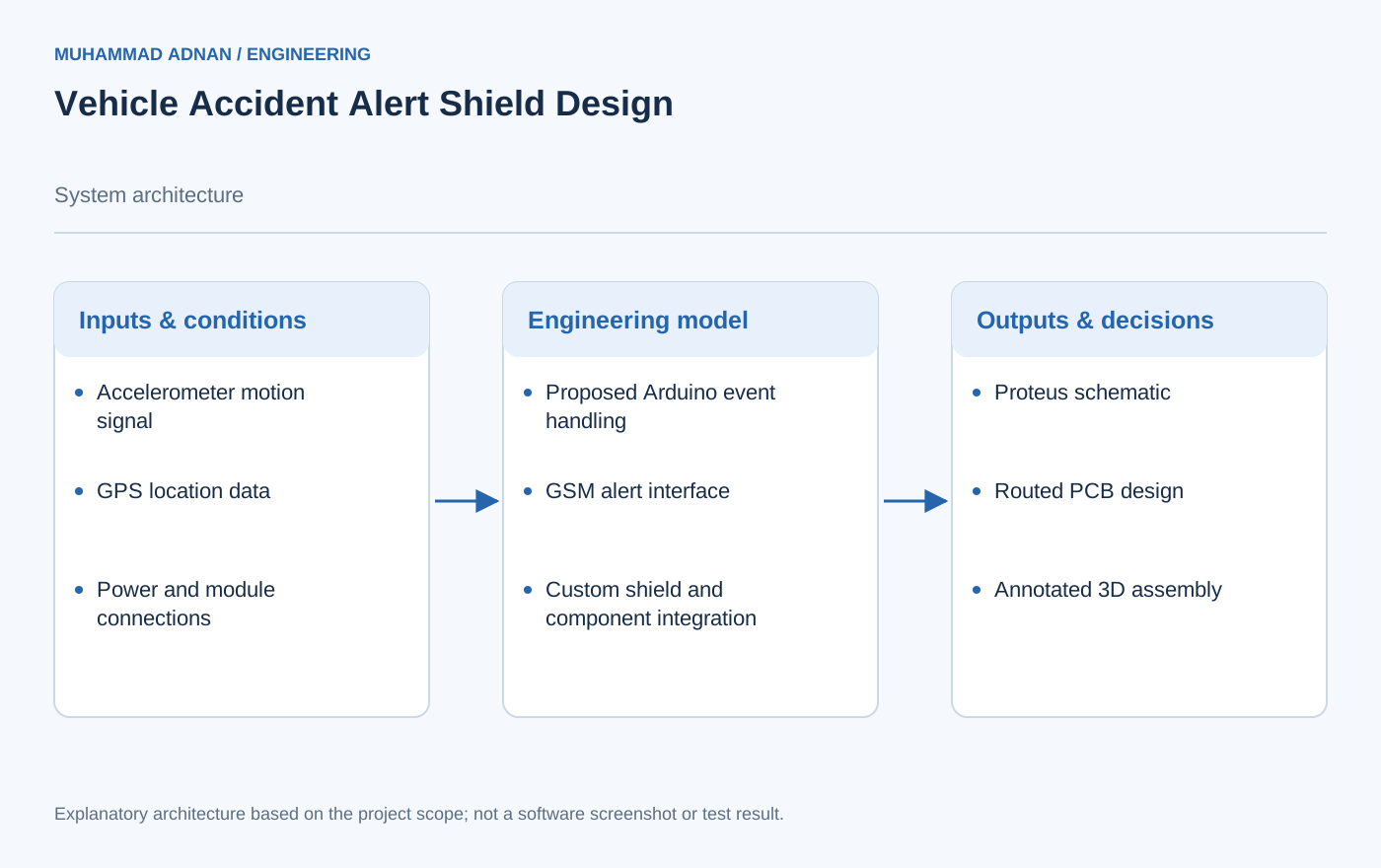
This project develops the electronic packaging for a vehicle accident alert concept built around an Arduino Uno. The proposed system combines an ADXL335 accelerometer, a NEO-6M GPS module, a SIM900A GSM module, a 16-by-two character display and supporting connectors. Its intended sequence is to identify a sudden motion event, obtain a location and communicate an alert. The documented work concentrates on schematic capture, board layout and three-dimensional assembly visualization. Proteus is used to construct the circuit and route the board, while SolidWorks supplies component models for the assembly view. Missing module libraries create a practical design problem: the report describes making custom representations for the Arduino shield, GPS module, accelerometer, display and potentiometer so the layout is easier to interpret than a collection of generic headers. The board is described as single-sided, with manually routed bottom-layer tracks and a shield connection to the Arduino. The GSM module is treated separately because its connections do not suit direct soldering onto the board. The resulting schematic, routing view and annotated assembly document the design progression and module arrangement. They establish a CAD and PCB design exercise; the report does not include fabricated-board testing, firmware listings, accident-detection validation or measured alert-delivery performance.
The engineering challenge
Integrate several off-the-shelf modules into an understandable Arduino shield layout when suitable schematic, footprint and 3D libraries are unavailable.
Engineering approach
- Define the Arduino, accelerometer, GPS, GSM, display and connector arrangement.
- Create module representations in Proteus and connect the schematic.
- Route the board manually using the report’s single-sided layout approach.
- Model missing component geometry in SolidWorks for the Proteus assembly view.
- Document the shield connections and physical module locations in an annotated 3D view.
Results & observations
The report describes manual routing using bottom-layer copper tracks.
The board uses shield connections rather than directly soldering the Arduino onto the PCB.
The proposed configuration combines motion sensing, NEO-6M location data and SIM900A messaging.
Three distinct technical views document the circuit, routing and component assembly; no field-test metrics are supplied.
Features & capabilities
- Module-level schematic
- Custom component libraries
- Manual PCB routing
- Arduino shield footprint
- CAD component modeling
- Annotated assembly visualization
Software & engineering tools
Proteus, SolidWorks, Arduino Uno, ADXL335, NEO-6M GPS, SIM900A GSM