
Project brief
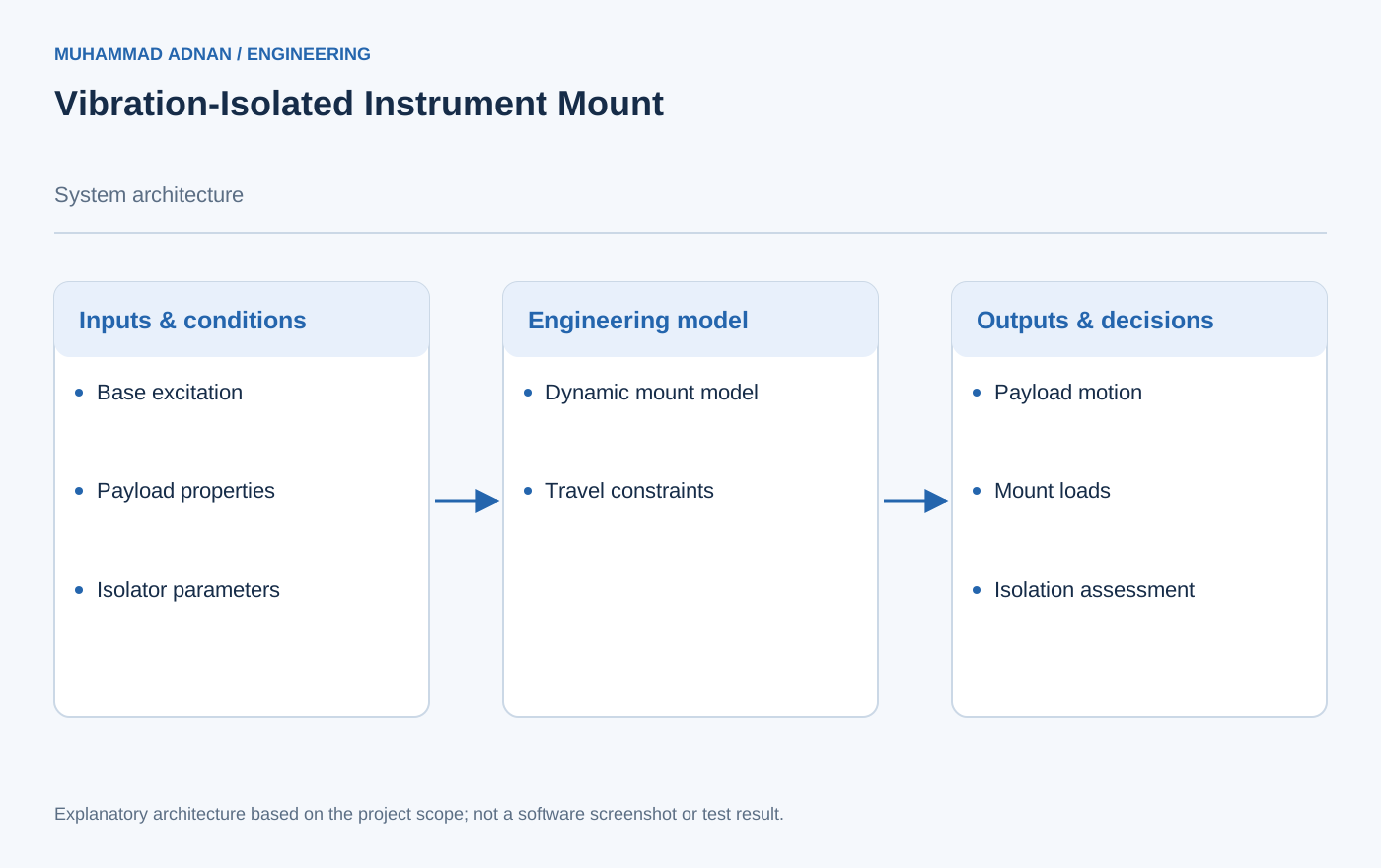
This proposed study would develop a mount for a generic laboratory instrument exposed to vibration from nearby equipment. The work would start with a mass and mounting-envelope definition, then compare elastomer and spring-damper arrangements using a simple rigid-body model. CAD would address isolator access, cable routing, alignment features, and mechanical travel limits. The model would help identify conditions where isolation may improve or worsen transmitted motion, making resonance an explicit design consideration. Deliverables would include an adjustable mount layout, assumed excitation cases, and a measurement plan using reference and payload accelerometers. Any frequency-response figure produced later would be identified as simulated or measured, and no isolation effectiveness is claimed at the concept stage.
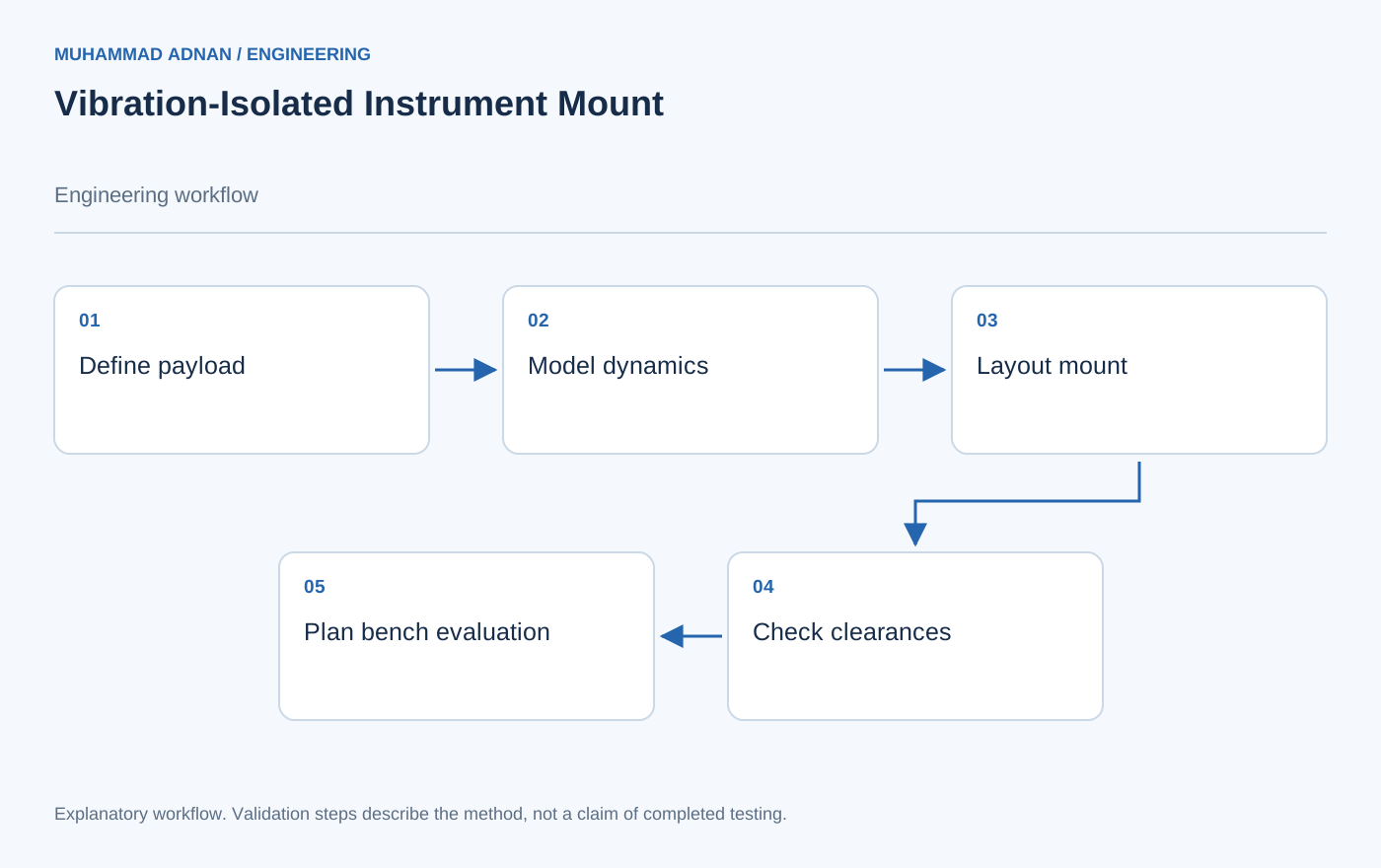
Design concept developed for this portfolio. The diagrams describe the proposed system; implementation and testing are part of the validation plan.
The engineering challenge
Balance vibration isolation against payload alignment, resonance amplification, and allowable motion.
Engineering approach
- Define payload inertia and mounting constraints.
- Compare isolator stiffness and damping arrangements.
- Check static displacement and travel-stop clearances.
- Plan paired base-and-payload vibration measurements.
Validation plan
- Compare static deflection with the mount model.
- Use a controlled low-amplitude sweep to locate resonances.
- Check that cable routing does not bypass the isolators.
Concept scope
- Interchangeable isolator seats
- Cable strain relief
- Adjustable payload plate
- Mechanical travel limits
- Modal comparison model
Software & engineering tools
FreeCAD, Python SciPy, CalculiX, Accelerometer logger