
Project brief
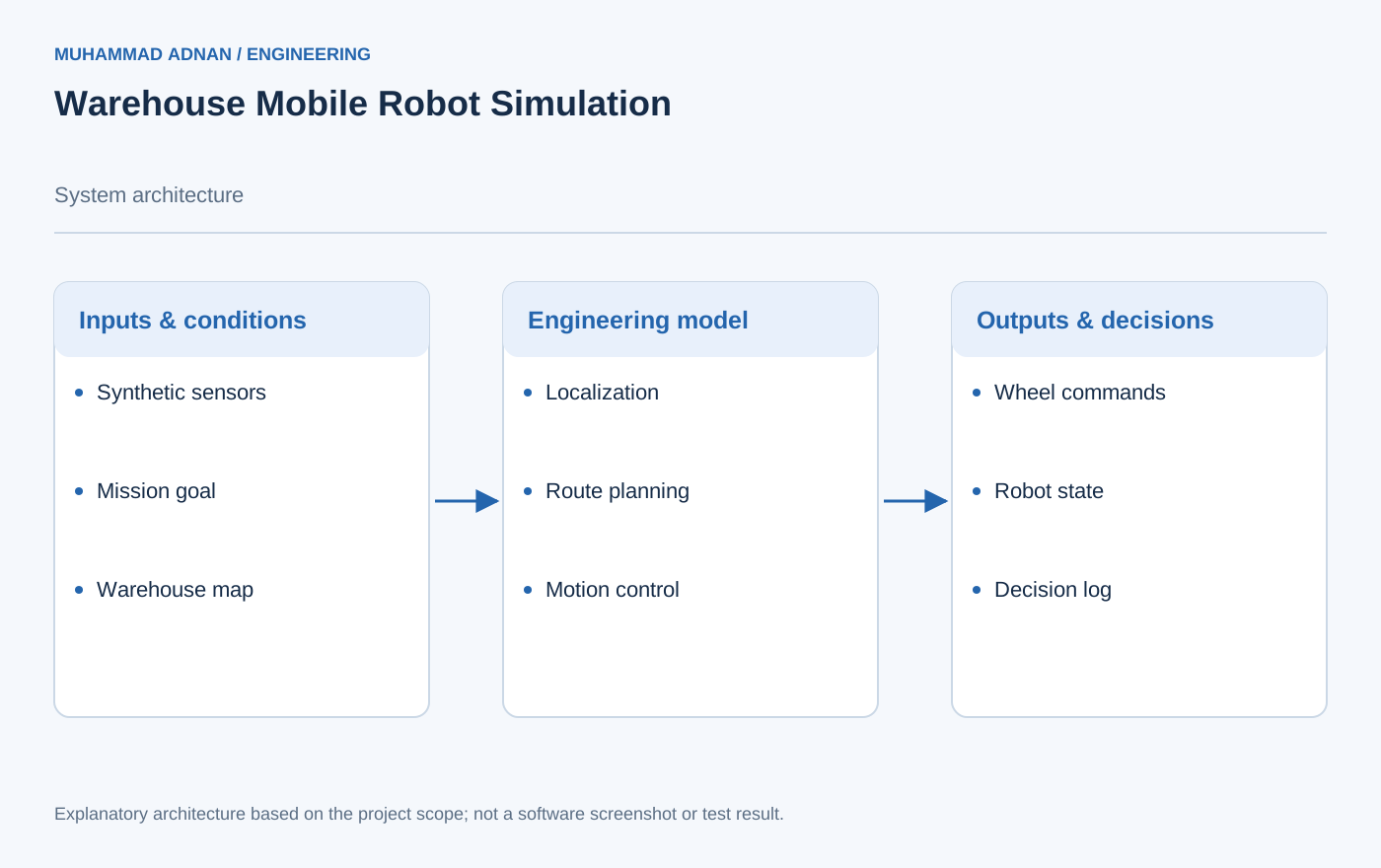
This concept would create a simulation environment for a small differential-drive mobile robot carrying generic totes through a synthetic warehouse. The model would include wheel kinematics, sensor uncertainty, map features, and deliberate obstruction scenarios. Navigation would be separated from mission sequencing so that path-following behavior and task-state decisions can be reviewed independently. The proposed interface would show the selected goal, planned route, local obstacles, and the reason for a stop or replan. Deliverables would include a robot model, simulation scenarios, and a comparison log for navigation settings. The exercise would remain simulation-only unless a separate prototype phase is undertaken, and it would not claim autonomous operation in a real workplace or validated human-robot safety.
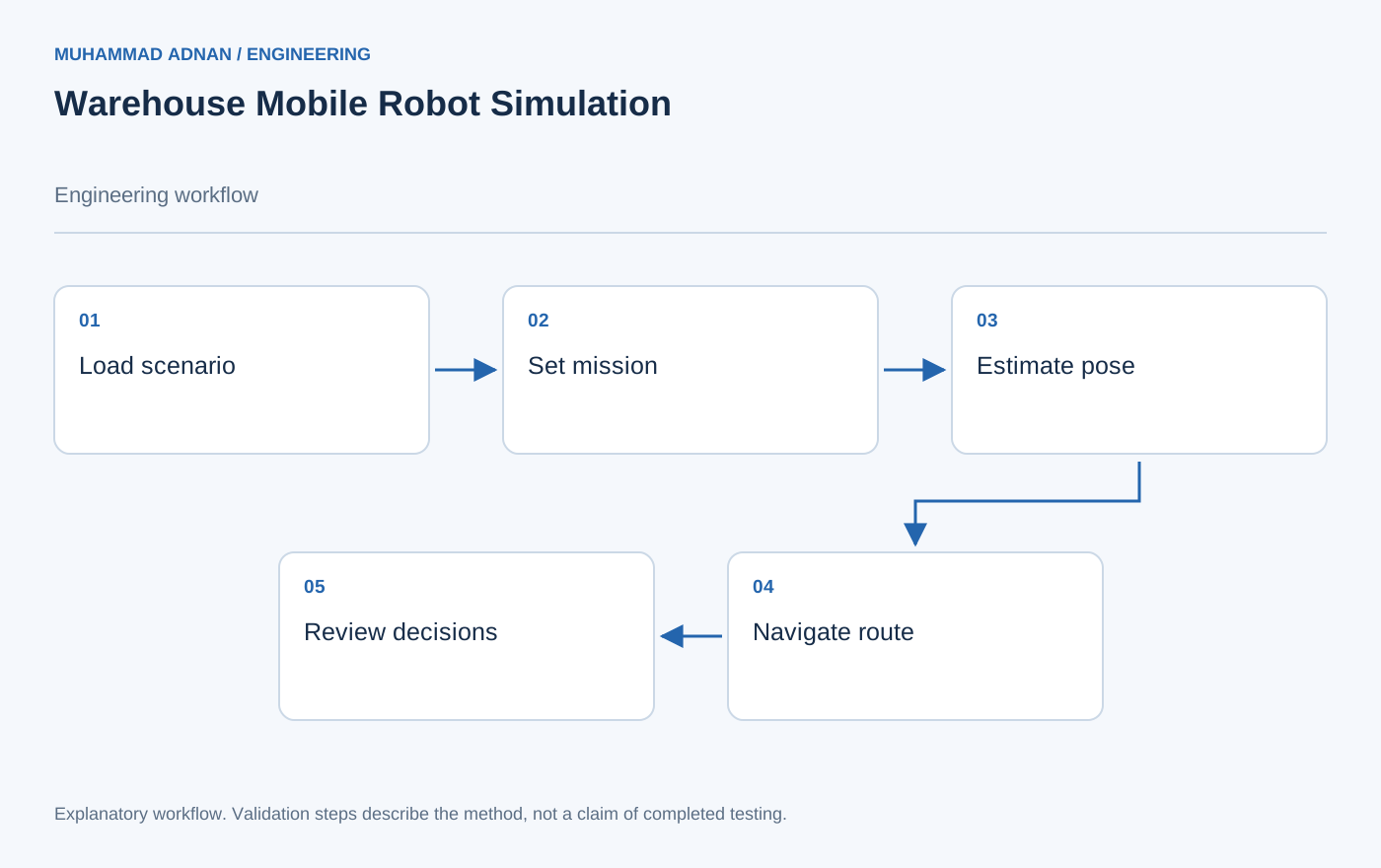
Design concept developed for this portfolio. The diagrams describe the proposed system; implementation and testing are part of the validation plan.
The engineering challenge
Keep navigation and task behavior understandable when wheel estimates drift or a planned route becomes blocked.
Engineering approach
- Build a differential-drive model and synthetic map.
- Separate localization, path following, and mission states.
- Create obstruction and sensor-degradation scenarios.
- Log stop and replan reasons alongside trajectories.
Validation plan
- Check kinematics against simple straight and circular motions.
- Run blocked-route scenarios and inspect stopping behavior.
- Compare repeat runs using recorded random seeds.
Concept scope
- Synthetic warehouse map
- Differential-drive model
- Explicit mission states
- Obstacle scenarios
- Decision-event log
Software & engineering tools
ROS 2, Gazebo, Python, RViz